LMFAO From Internet Slang to Cultural Signal in the Digital Age
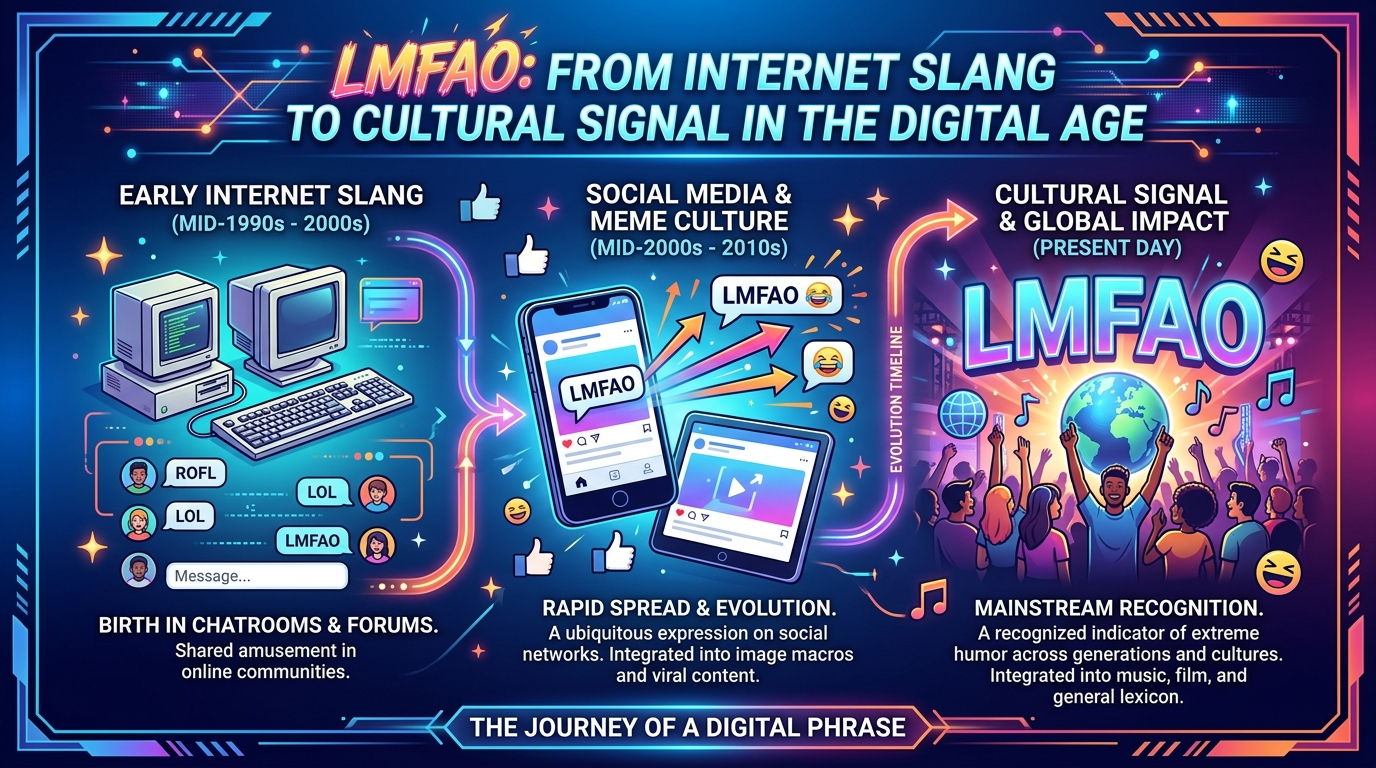
It started, as many digital habits do, with a moment of unfiltered reaction. Picture a late-night group chat, someone drops an unexpectedly sharp joke, and before anyone can craft a thoughtful reply, a simple “lmfao” appears. It’s quick, instinctive, and oddly powerful. That four-letter acronym, once confined to niche internet forums, has grown into a widely recognized expression one that carries more nuance than its blunt phrasing suggests.
In today’s fast-moving digital landscape, where brevity often replaces depth, “lmfao” stands as a fascinating example of how language evolves. It’s not just slang; it’s a cultural marker, a signal of tone, and a reflection of how people communicate in an era defined by speed and informality.
The Origins of LMFAO and Its Rise
“LMFAO,” short for “laughing my fing ass off,” emerged during the early days of internet chatrooms and message boards. Back then, users needed a way to convey emotion without the benefit of voice or facial expression. Acronyms like “LOL” (laugh out loud) and “ROFL” (rolling on the floor laughing) quickly gained traction, but “lmfao” added an extra layer intensity.
Its rise coincided with the explosion of texting and social media platforms in the late 2000s and early 2010s. As communication shifted toward shorter formats, people gravitated toward expressions that packed emotional weight into minimal characters. “LMFAO” wasn’t just laughter; it was emphatic, almost exaggerated amusement.
Interestingly, its popularity also reflects broader changes in communication norms. Language online became less formal, more expressive, and often more irreverent. What might have been considered inappropriate in traditional writing found acceptance and even preference in digital spaces.
Beyond Humor: What LMFAO Really Conveys
At first glance, “lmfao” seems straightforward: it means something is very funny. But in practice, its usage is far more layered.
In many conversations, “lmfao” functions less as a literal expression of laughter and more as a tone-setting device. It can soften criticism, signal sarcasm, or even mask discomfort. For example, someone might respond to an awkward statement with “lmfao” not because they’re amused, but because they want to diffuse tension.
This flexibility is what makes the term so enduring. Unlike traditional language, which often demands precision, digital slang thrives on ambiguity. The meaning of “lmfao” shifts depending on context, relationship, and platform.
For entrepreneurs, founders, and professionals navigating online spaces, understanding these nuances is crucial. Misinterpreting tone in digital communication can lead to misunderstandings, especially in environments where clarity matters.
The Role of LMFAO in Professional Communication
There was a time when terms like “lmfao” were strictly off-limits in professional settings. Today, the boundaries are less rigid.In startup culture, tech communities, and informal work environments, the use of casual language including “lmfao” is increasingly common. It reflects a broader shift toward authenticity and relatability. Leaders and teams often aim to communicate in ways that feel human rather than overly polished.
However, context remains everything.Using “lmfao” in an internal Slack message among colleagues might signal camaraderie and ease. Using it in a client email or investor pitch, on the other hand, could undermine credibility. The key lies in understanding audience expectations and adjusting tone accordingly.
This balancing act is particularly relevant for founders and tech professionals who operate across multiple communication channels. The same individual might move from a formal board meeting to a casual team chat within minutes. Each context demands a different linguistic approach.
Digital Language and the Psychology of Expression
Why do people gravitate toward terms like “lmfao” in the first place?The answer lies partly in psychology. Digital communication strips away many of the cues we rely on in face-to-face interaction. Without tone of voice or body language, messages can feel flat or ambiguous. Slang and acronyms help fill that gap.
“LMFAO” serves as a kind of emotional shorthand. It signals not just amusement, but intensity. It reassures the reader that the sender is engaged, reactive, and present.
There’s also an element of efficiency. In fast-paced environments whether social media, group chats, or workplace messaging people prioritize speed. Typing out a full sentence to express laughter feels unnecessary when a single acronym can do the job.
For tech readers and digital professionals, this highlights an important principle: communication tools evolve to match the pace and demands of their environment. Language adapts not because of rules, but because of usage.
The Cultural Impact of LMFAO
What began as niche slang has become a recognizable part of global digital culture. “LMFAO” appears in memes, tweets, comments, and even spoken conversation. People say it out loud, blurring the line between written and verbal language.
This crossover is significant. It how internet culture influences mainstream communication. Words and phrases that originate online often migrate into everyday speech, shaping how people interact offline.
The term has also been popularized through entertainment and media. Music, viral content, and influencer culture have all played a role in embedding “lmfao” into the collective vocabulary. As a result, it’s no longer limited to a specific demographic or platform.
For founders and entrepreneurs, this illustrates the power of cultural diffusion. Ideas whether linguistic, technological, or commercial can spread rapidly when they resonate with user behavior.
Comparing LMFAO to Other Digital Expressions
To better understand its place in digital communication, it helps to compare “lmfao” with similar expressions.
| Expression | Meaning | Intensity Level | Typical Use Case |
|---|---|---|---|
| LOL | Laugh out loud | Low to medium | Casual acknowledgment of humor |
| ROFL | Rolling on the floor laughing | High (but less common now) | Exaggerated humor, often ironic |
| LMFAO | Laughing my f***ing ass off | High | Strong reaction, emphasis, or tone-setting |
| Haha | General laughter | Variable | Flexible, depends on repetition |
| 😂 (emoji) | Visual laughter | Medium to high | Universal, cross-language communication |
What sets “lmfao” apart is its balance between intensity and adaptability. It’s stronger than “LOL” but more commonly used than “ROFL.” Unlike emojis, it carries a distinctly textual identity, rooted in internet culture.
When Not to Use LMFAO
Despite its versatility, there are clear situations where “lmfao” is inappropriate.
Formal communication remains the most obvious example. Business proposals, academic writing, and official correspondence demand clarity and professionalism. In these contexts, slang can distract from the message and reduce perceived credibility.
Cultural sensitivity is another factor. Not all audiences interpret slang the same way. What feels casual and friendly in one context may come across as disrespectful or confusing in another.
There’s also the risk of overuse. Like any linguistic trend, repetition can dilute impact. When every message includes “lmfao,” it loses its expressive power and becomes background noise.
For professionals, the takeaway is simple: use it intentionally, not habitually.
The Future of Digital Slang
Will “lmfao” still be relevant in five or ten years? That’s an open question.
Digital language is constantly evolving. New platforms, technologies, and cultural shifts give rise to new forms of expression. Some terms fade quickly, while others endure.
“LMFAO” has already demonstrated staying power, largely because of its adaptability. It fits seamlessly into various contexts and continues to resonate with users across different demographics.
However, its future will depend on how communication itself evolves. As voice messaging, video content, and AI-driven interfaces become more prominent, the role of text-based slang may change.
For tech readers and founders, this underscores a broader insight: language is a living system. It evolves alongside technology, reflecting how people interact with each other and with the tools they use.
Final Thoughts
“LMFAO” might seem like a trivial piece of internet slang, but it tells a much larger story. It represents the shift toward faster, more expressive communication. It highlights the blending of personal and professional language. And it illustrates how culture spreads in a digital world.
For entrepreneurs and professionals, paying attention to these small details can offer valuable perspective. Communication is at the heart of every business whether it’s building a product, leading a team, or connecting with customers.
Understanding how people express themselves, even through something as simple as “lmfao,” provides insight into behavior, expectations, and culture. And in a world where attention is limited and clarity is essential, that understanding can make all the difference.










Post Comment