Crackstube Rethinking Digital Access and Ethical Boundaries in the Age of Content

A young developer curious, resourceful, and operating on a tight budget was trying to access a premium software tool he couldn’t afford. Like many in the early stages of building something, he was caught between ambition and limitation. That search led him to a term he hadn’t encountered before: crackstube.
At first glance, crackstube looked like just another corner of the internet promising shortcuts free access to paid tools, unlocked features, unrestricted content. But as he dug deeper, what he found was more complicated than convenience. It was a reflection of a broader tension in the digital economy: access versus ethics, speed versus sustainability.
Today, crackstube isn’t just a keyword floating around obscure forums. It represents a growing conversation among entrepreneurs, tech readers, and founders about how we consume, distribute, and value digital products.
What Is Crackstube?
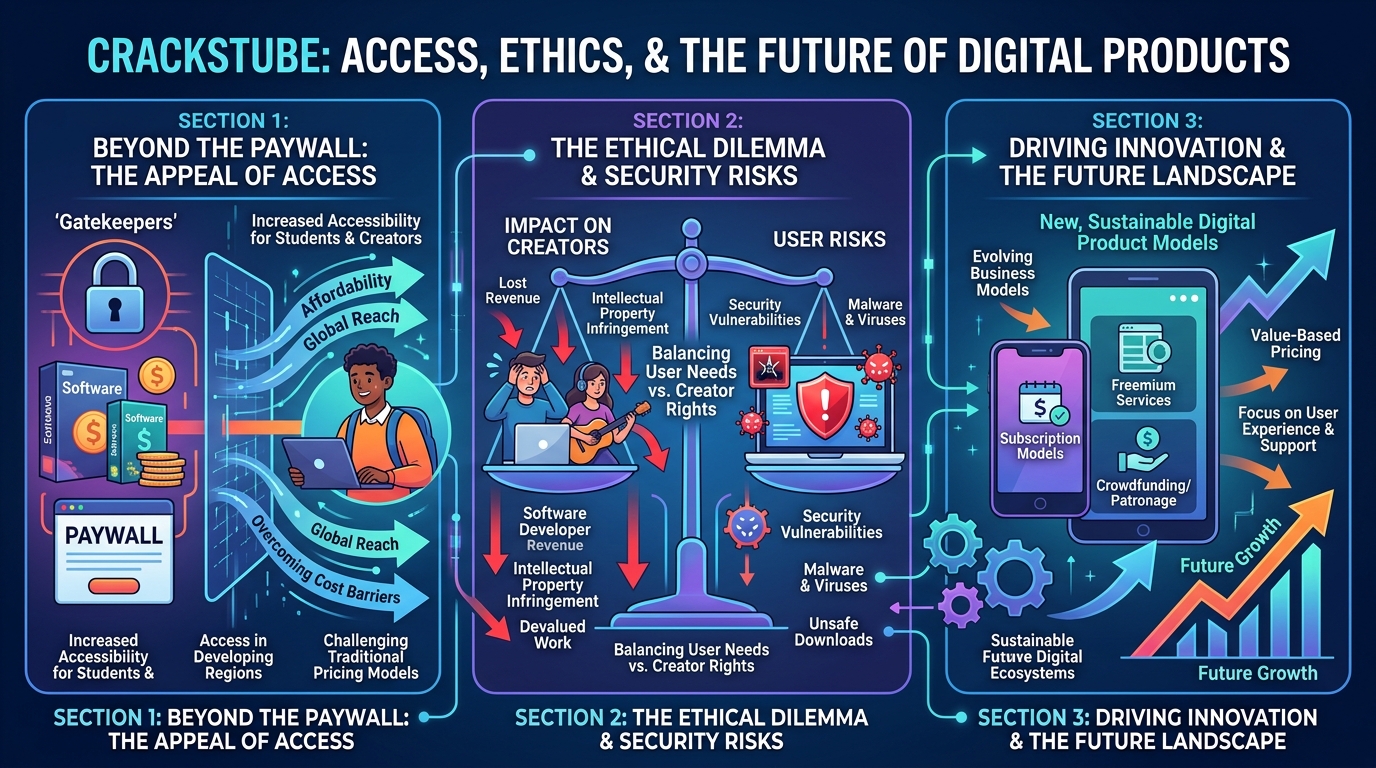
Crackstube, in its most commonly understood form, refers to platforms or networks that distribute modified, “cracked,” or unauthorized versions of software, media, or digital tools often bypassing licensing restrictions or payment systems.
While the term itself may sound niche, the concept behind it is widespread. From pirated software to unlocked premium subscriptions, crackstube sits within a larger ecosystem of digital workarounds that challenge traditional business models.
But reducing it to piracy alone misses the bigger picture.
Crackstube reflects a demand sometimes unspoken for accessible technology. It reveals where pricing, distribution, or availability may not align with user expectations or economic realities.
The Real World Context Behind Crackstube
To understand why crackstube exists, you have to look at the environment that enables it.
The digital economy has made powerful tools widely available, but not always widely affordable. Subscription models, licensing fees, and region-based pricing can create barriers, particularly for early-stage entrepreneurs or developers in emerging markets.
For someone trying to build a startup with limited capital, access to tools isn’t optional—it’s foundational. When legitimate pathways feel out of reach, alternative routes become tempting.
This doesn’t justify the behavior, but it explains the motivation.
Crackstube, in many ways, is a symptom of this gap between availability and accessibility.
The Ethical Dilemma
For founders and tech leaders, crackstube raises an uncomfortable question: Where do we draw the line between necessity and integrity?
On one hand, using unauthorized tools can accelerate learning, experimentation, and even early innovation. On the other, it undermines the very ecosystem that creates those tools in the first place.
Software companies, developers, and creators rely on revenue to sustain their work. When their products are distributed without compensation, it affects not just profits, but the incentive to innovate.
This creates a paradox. The same entrepreneurs who benefit from access today may become the creators affected by misuse tomorrow.
Crackstube forces a confrontation with this reality.
The Business Perspective
From a strategic standpoint, crackstube offers valuable insight not as a solution, but as a signal.
When a product is widely pirated or shared through unauthorized channels, it often indicates one of three things:
First, there is strong demand. People want the product badly enough to seek alternative access.
Second, there may be friction in the pricing or distribution model. If users feel excluded, they look for workarounds.
Third, the perceived value outweighs the perceived risk. Users are willing to navigate legal or technical uncertainties to gain access.
For companies, this information can be useful. It highlights opportunities to rethink pricing tiers, introduce freemium models, or expand accessibility in underserved markets.
Crackstube vs Sustainable Growth
The contrast between crackstube-driven access and sustainable business practices is stark.
| Dimension | Crackstube Behavior | Sustainable Approach |
|---|---|---|
| Access Model | Unauthorized, unrestricted | Licensed, structured |
| Short-Term Benefit | Immediate access | Gradual but legitimate growth |
| Long-Term Impact | Risk of instability | Predictable and scalable |
| Ethical Standing | Questionable | Aligned with industry norms |
| Ecosystem Contribution | Extractive | Supportive |
This comparison highlights why crackstube, while tempting, is rarely a viable long-term strategy.
The Founder’s Dilemma
For early-stage founders, the pressure to move quickly can blur ethical boundaries.
You need tools to build. You need resources to compete. And often, you don’t have the budget to access everything legitimately.
This is where judgment becomes critical.
There’s a difference between resourcefulness and dependency. Using free trials, open-source alternatives, or discounted startup programs reflects strategic thinking. Relying on unauthorized access creates hidden risks legal, operational, and reputational.
More importantly, it shapes how a company approaches value. If a business is built on cutting corners, that mindset can carry into how it treats customers and partners.
The Hidden Risks of Crackstube
Beyond ethics, crackstube carries practical risks that are often underestimated.
Security is one of the biggest concerns. Unauthorized software can contain malware, backdoors, or vulnerabilities that compromise data and systems.
There’s also the issue of reliability. Cracked tools may not receive updates, support, or bug fixes, which can disrupt workflows at critical moments.
Legal exposure is another factor. While enforcement varies, using unauthorized software can lead to penalties, especially as companies scale and become more visible.
These risks don’t always appear immediately but when they do, they can be costly.
A Shift Toward Accessibility
Interestingly, the rise of crackstube has influenced how many companies design their products.
Over the past decade, there’s been a noticeable shift toward more flexible pricing models. Freemium tiers, student discounts, and startup credits have become increasingly common.
This isn’t accidental.
Businesses are recognizing that accessibility drives adoption. By lowering the barrier to entry, they can capture users early and convert them into paying customers over time.
In this sense, crackstube has indirectly pushed the industry toward more inclusive practices.
Alternatives That Align With Growth
For entrepreneurs and tech readers, the question isn’t just whether to avoid crackstube it’s what to do instead.
The good news is that the ecosystem has evolved. Open-source tools now rival many paid solutions. Cloud platforms offer credits for startups. Communities share resources, templates, and knowledge at unprecedented levels.
These alternatives may require more effort to discover or implement, but they come with a key advantage: they’re sustainable.
They allow you to build without compromising the integrity of your work.
Why Crackstube Still Persists
Despite these alternatives, crackstube hasn’t disappeared.Its persistence comes down to one factor: convenience. When something is easily accessible, immediate, and free, it will always attract attention.
This is especially true in high-pressure environments where speed is prioritized over process.But convenience often comes at a cost one that isn’t always visible upfront.
The Future of Digital Access
Looking ahead, the conversation around crackstube is likely to evolve.
As technology becomes more integrated into everyday life, the question of who gets access and how will become increasingly important.
We may see more adaptive pricing models, greater emphasis on global accessibility, and stronger enforcement of digital rights. At the same time, user expectations will continue to push for affordability and flexibility.
The balance between these forces will shape the next phase of the digital economy.
Final Thoughts
The developer who first encountered crackstube eventually made a different choice. Instead of relying on shortcuts, he sought out alternatives open-source tools, community resources, and legitimate entry points.
It wasn’t always easy. It took more time, more effort, and more creativity. But it also gave him something crackstube couldn’t: a foundation he could build on without hesitation.
Crackstube, in the end, is less about the tools themselves and more about the decisions behind them.
For entrepreneurs, founders, and tech leaders, those decisions matter. They shape not just what you build, but how you build it and whether it can last.
In a world where access is expanding but integrity still defines success, that distinction is more important than ever.










Post Comment