Crackstube What It Reveals About Access, Ethics, and the Future of Digital Products
The first time crackstube came up in conversation, it wasn’t framed as a problem. It was mentioned almost casually during a discussion between two early-stage founders comparing the tools they used to build their products. One of them, working with almost no budget, admitted he had explored “alternative access” just to keep pace.
There was no bravado in the admission, just a quiet acknowledgment of reality: building in today’s digital economy often requires tools that aren’t always within reach.
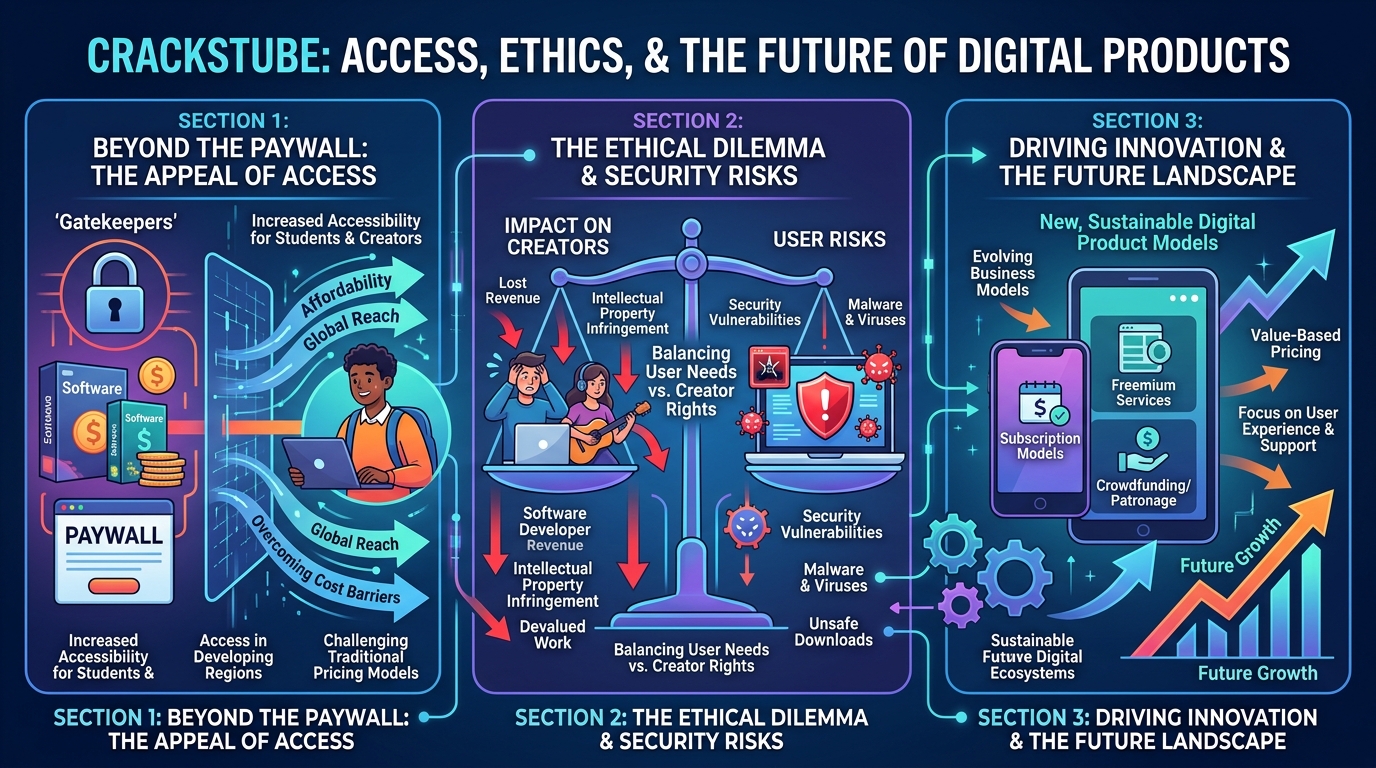
That moment unremarkable on the surface points to a deeper tension shaping modern entrepreneurship. Crackstube is not just a term associated with unauthorized access; it’s a reflection of how demand, affordability, and ethics collide in a world where software powers everything.
Understanding Crackstube Beyond the Surface
Crackstube typically refers to platforms or ecosystems where users access modified or “cracked” versions of software, bypassing licensing restrictions or payment requirements. It exists in a gray area of the internet widely known, quietly used, and openly debated.
But reducing crackstube to simple piracy misses its broader significance.
At a structural level, it highlights a mismatch between value creation and value accessibility. Software today is more powerful than ever, yet often locked behind pricing models that can feel prohibitive especially for founders in early stages or in emerging markets.
Crackstube, in that sense, becomes less about rule-breaking and more about unmet demand.
The Environment That Fuels Crackstube
To understand why crackstube persists, it’s important to examine the environment that sustains it.
Modern businesses rely heavily on digital tools design platforms, analytics dashboards, development environments, automation systems. These tools are not luxuries; they are essential infrastructure.
Yet the cost of accessing them can add up quickly. Subscription models, while convenient for scaling companies, can be restrictive for individuals just starting out. A founder might need five or six different tools to operate effectively, each with its own recurring fee.
This creates a friction point.
When legitimate access feels financially out of sync with immediate needs, alternatives begin to surface. Crackstube thrives in this gap not because it offers a better solution, but because it offers immediate relief.
The Ethical Crossroads
For entrepreneurs and tech leaders, crackstube raises a complex question: Is access without permission ever justifiable?
On one side of the argument is practicality. Founders often operate under constraints limited capital, tight timelines, high expectations. Access to tools can accelerate learning, experimentation, and execution.
On the other side is sustainability. Software doesn’t exist in a vacuum. Behind every product are teams of developers, designers, and operators who depend on revenue to continue building.
Using unauthorized versions of tools may solve a short-term problem, but it introduces a long-term contradiction. It undermines the very ecosystem that entrepreneurs rely on to innovate.
Crackstube forces a confrontation between these two realities.
A Signal for Product Strategy
Interestingly, crackstube also serves as a form of market feedback.When a product is widely accessed through unauthorized channels, it often indicates strong demand. People don’t seek out workarounds for tools they don’t value. The effort involved suggests that the product is worth having.
But it can also signal friction whether in pricing, onboarding, or regional accessibility.
For companies, this creates an opportunity. Instead of viewing crackstube purely as a threat, it can be analyzed as a signal: where are users struggling to access value? What barriers are pushing them toward alternatives?
This perspective has already influenced how many companies design their offerings.
Crackstube and the Evolution of Pricing Models
Over time, the industry has begun to respond to the accessibility challenge that crackstube represents.
Freemium models have become more common, allowing users to access basic features at no cost. Startup credits and educational discounts have expanded, particularly in cloud computing and SaaS platforms. Open-source alternatives have gained traction, offering powerful capabilities without licensing fees.
These shifts are not coincidental.
They reflect a recognition that accessibility drives adoption. By lowering the barrier to entry, companies can build trust, expand their user base, and create pathways to monetization that don’t rely solely on upfront payment.
In this way, crackstube has indirectly influenced a more inclusive approach to product design.
Comparing Short-Term Access vs Long-Term Strategy
| Dimension | Crackstube Approach | Sustainable Approach |
|---|---|---|
| Access | Immediate, unauthorized | Gradual, legitimate |
| Cost | Free upfront | Structured and scalable |
| Risk | Security and legal exposure | Minimal when compliant |
| Reliability | Inconsistent updates and support | Stable and continuously improved |
| Long-Term Value | Limited and fragile | Compounding and dependable |
This comparison highlights a key distinction: what feels efficient in the short term often proves costly over time.
The Hidden Risks Often Overlooked
While the ethical considerations around crackstube are widely discussed, the practical risks are sometimes underestimated.Security is a primary concern. Unauthorized software can carry hidden vulnerabilities malware, data tracking mechanisms, or compromised code. For a startup handling sensitive data, this risk can be significant.
Reliability is another issue. Cracked tools often lack updates, which means missing out on new features, bug fixes, and compatibility improvements. Over time, this can slow down development rather than accelerate it.
There’s also the matter of credibility. As companies grow, their operational choices come under greater scrutiny. Relying on unauthorized tools can create complications during audits, partnerships, or funding rounds.
These risks don’t always surface immediately, but when they do, they tend to compound.
The Founder’s Perspective
For many founders, the conversation around crackstube isn’t theoretical it’s personal.
In the early days, every decision carries weight. Spending on tools competes with spending on marketing, hiring, or product development. The pressure to move quickly can make shortcuts seem reasonable.
But there’s a deeper layer to consider.
The habits formed in the early stages often shape the culture of a company. Choosing sustainable, ethical approaches even when they’re more challenging sets a precedent for how decisions are made later.
It’s not just about compliance; it’s about consistency.
Alternatives That Support Real Growth
The good news is that today’s ecosystem offers more legitimate pathways than ever before.
Open-source software has matured significantly, providing viable alternatives to many paid tools. Communities share knowledge, templates, and resources freely, reducing the need for expensive solutions. Many companies offer tiered pricing that scales with usage, making it easier to start small.
These options may require more exploration, but they align with long-term growth.
They allow founders to build with confidence, knowing that their foundation is stable and scalable.
Why Crackstube Continues to Exist
Despite these alternatives, crackstube remains part of the digital landscape.
The reason is simple: convenience.
Immediate, unrestricted access will always be appealing, especially in high-pressure environments where speed is prioritized. But convenience often masks complexity. What appears to save time or money upfront can introduce hidden costs later.
Understanding this trade-off is essential for making informed decisions.
Looking Ahead: The Future of Access
The conversation around crackstube is ultimately part of a larger shift in how digital products are distributed and consumed.
As technology becomes more integral to everyday work, the demand for accessible tools will continue to grow. Companies will need to balance profitability with inclusivity, finding ways to reach users without creating barriers.
We may see more adaptive pricing models, greater emphasis on global accessibility, and continued growth in open-source ecosystems.
At the same time, awareness around ethics and sustainability is increasing. Founders are becoming more intentional about how they build not just what they build.
Final Thoughts
The founder who first mentioned crackstube in that quiet conversation eventually moved away from it. Not because it wasn’t useful in the moment, but because it wasn’t sustainable.
He found alternatives, adjusted his workflow, and built his company on tools he could rely on without hesitation.
Crackstube, in the end, is less about access and more about choices.
It reflects the tension between urgency and integrity, between what’s possible now and what’s viable long term. For entrepreneurs, tech readers, and founders navigating an increasingly complex digital world, that distinction matters.
Because how you build is just as important as what you build and the decisions you make early on tend to define both.











Post Comment