How to Boil Chic Peas The Simple Kitchen Skill That Changes Everything
The smell of simmering chickpeas has a way of slowing a kitchen down. Long before meal-prep culture and protein-focused recipes filled social media feeds, cooks across the Middle East, South Asia, the Mediterranean, and Latin America relied on chickpeas as a practical staple affordable, filling, and endlessly adaptable. In many homes, a pot of chickpeas bubbling quietly on the stove signaled preparation for several meals ahead: creamy hummus, hearty curries, crisp salads, or slow-cooked stews built for busy weeks.
Today, interest in learning how to boil chic peas has grown far beyond traditional cooking circles. Health-conscious consumers, plant-based eaters, and even restaurant chefs are rediscovering the value of cooking chickpeas from scratch instead of relying solely on canned alternatives. While canned chickpeas offer convenience, boiled dried chickpeas provide better texture, deeper flavor, and greater control over the final dish.
The process itself is surprisingly simple. Yet mastering it changes the way people cook at home. Properly boiled chickpeas can become the foundation for economical meals, high-protein recipes, and restaurant quality dishes that taste fresher and more balanced than anything pulled from a can.
Why Dried Chickpeas Still Matter
In modern kitchens, convenience often wins. Pre cooked ingredients save time, reduce preparation, and fit into fast-paced schedules. But dried chickpeas continue to hold a special place because they deliver qualities that packaged versions cannot fully replicate.
Texture is the first difference most cooks notice. Freshly boiled chickpeas can be adjusted depending on the intended use. They can remain slightly firm for salads or become exceptionally soft for hummus and soups. Canned chickpeas, by contrast, arrive with a fixed texture that may not suit every recipe.
Flavor also improves dramatically when chickpeas are cooked from dry. They retain a subtle nuttiness and earthy depth often muted during industrial processing. This matters in minimalist dishes where chickpeas are the star ingredient.
Cost plays an equally important role. Dried chickpeas are significantly cheaper per serving than canned products, making them attractive for large families, meal preppers, and food businesses trying to manage ingredient budgets efficiently.
As consumers become more aware of food quality and sustainability, simple cooking skills like boiling chickpeas are experiencing renewed relevance.
Understanding Chickpeas Before Cooking
Not all chickpeas behave exactly the same during cooking. The two most common varieties are kabuli chickpeas and desi chickpeas.
Kabuli chickpeas are larger, lighter in color, and commonly used in Western supermarkets. Their creamy texture makes them ideal for hummus, salads, and roasting.
Desi chickpeas are smaller and darker with a firmer texture. They appear frequently in South Asian cuisine and carry a slightly nuttier flavor.
Age matters too. Older dried chickpeas take longer to soften because moisture content decreases over time. This explains why some batches cook beautifully while others remain stubbornly firm despite hours on the stove.
Water quality can also influence cooking results. Hard water containing high mineral content may slow softening. Many experienced cooks compensate by extending soaking time or adding ingredients strategically during cooking.
Understanding these variables helps explain why boiling chickpeas sometimes feels inconsistent for beginners.
The Importance of Soaking
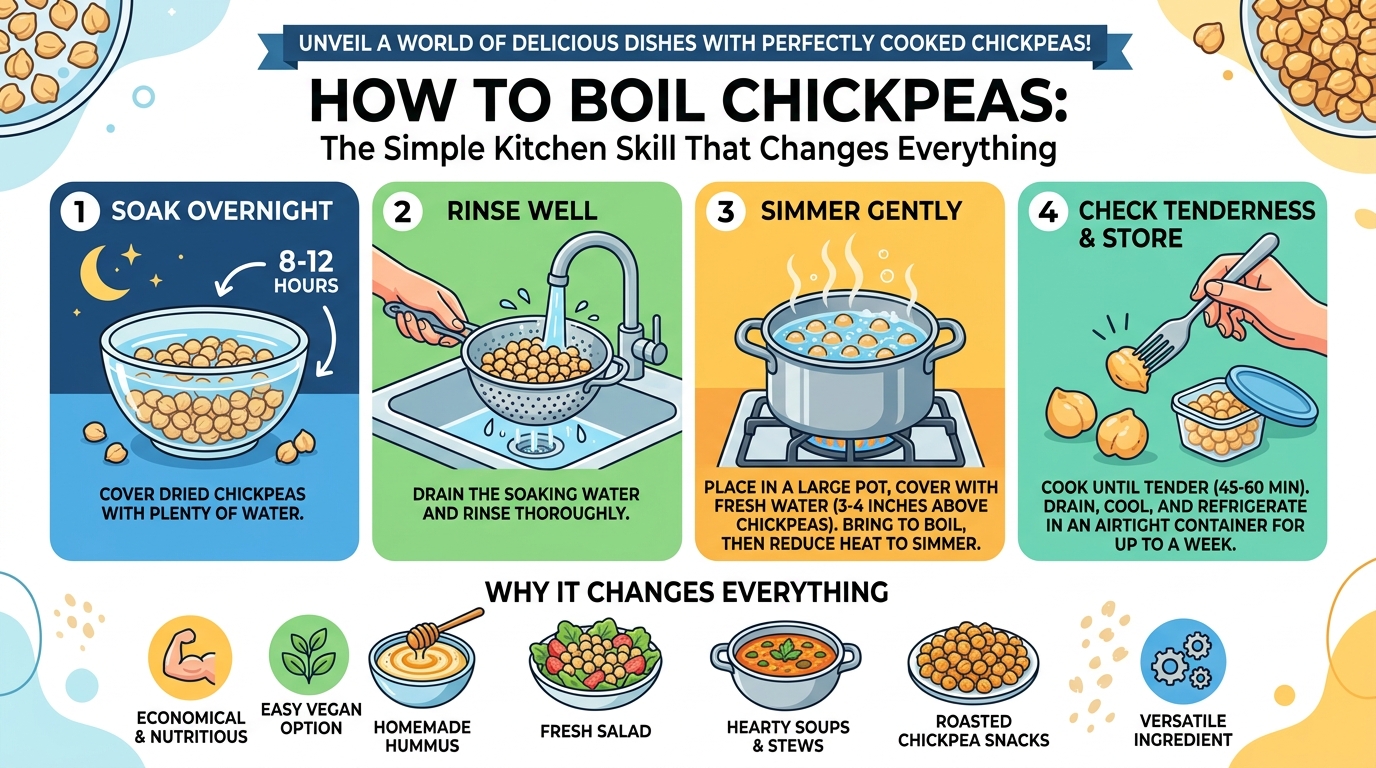
One of the biggest debates around how to boil chic peas centers on soaking. Technically, chickpeas can cook without soaking, but soaking remains highly recommended for several reasons.
First, soaking dramatically shortens cooking time. Dry chickpeas absorb water overnight, allowing heat to penetrate more efficiently later. Without soaking, cooking can take several hours longer.
Second, soaking helps chickpeas cook more evenly. Uniform hydration reduces the risk of hard centers or split exteriors.
Third, many cooks find soaked chickpeas easier to digest. During soaking, some complex sugars responsible for digestive discomfort begin breaking down naturally.
The most common method is overnight soaking. Chickpeas are placed in a large bowl with plenty of water because they expand significantly. Typically, eight to twelve hours produces excellent results.
Quick-soak methods also exist for busy schedules. In this approach, chickpeas boil briefly for several minutes before resting in hot water for about an hour. While not identical to overnight soaking, it still improves cooking performance considerably.
How to boil chic peas Properly
The actual cooking process is straightforward, but small details make a noticeable difference.
After soaking, chickpeas should be drained and rinsed thoroughly. Fresh water is then added to a large pot, usually covering the chickpeas by several inches since evaporation occurs during simmering.
At this stage, many cooks wonder about seasoning. Salt remains surprisingly controversial in bean cooking discussions. Older culinary wisdom warned that salt toughens legumes, but modern testing suggests moderate salting often improves flavor without significantly affecting texture.
Once the water reaches a boil, the heat should be reduced to a gentle simmer rather than a rolling boil. Aggressive boiling can break apart chickpeas unevenly and create messy skins floating throughout the pot.
Cooking time varies depending on freshness, soaking method, and desired softness. Most soaked chickpeas become tender within sixty to ninety minutes. Unsoaked chickpeas may require well over two hours.
The simplest way to test doneness is by tasting. A properly cooked chickpea should feel creamy inside without chalkiness.
A Quick Reference Table for Cooking Times
| Chickpea Preparation Method | Approximate Cooking Time | Best For |
|---|---|---|
| Overnight soaked | 60–90 minutes | Salads, curries, hummus |
| Quick-soaked | 90–120 minutes | Soups, stews |
| Unsoaked | 2–3 hours | Slow-cooked dishes |
| Pressure cooker soaked | 12–18 minutes | Fast meal prep |
| Pressure cooker unsoaked | 35–45 minutes | Emergency cooking |
This flexibility is one reason chickpeas remain globally popular. They adapt easily to different cooking styles and schedules.
The Pressure Cooker Revolution
Modern pressure cookers and multi cookers transformed how people prepare legumes at home. What once required half a day can now happen in under an hour.
For busy professionals and families, this matters enormously.
Pressure cooking chickpeas not only saves time but often produces highly consistent texture. Because moisture and heat remain trapped inside the sealed environment, chickpeas soften evenly and efficiently.
Electric multi-cookers further simplify the process with programmable settings. Many users now batch-cook chickpeas weekly and freeze portions for later use.
This shift mirrors broader food trends emphasizing convenience without sacrificing freshness. Consumers increasingly want homemade quality paired with modern efficiency.
Common Mistakes That Ruin Chickpeas
Despite the simplicity of boiling chickpeas, a few recurring mistakes often lead to disappointing results.
Using too little water is one of the most common issues. Chickpeas absorb substantial moisture during cooking, and insufficient water can leave them unevenly cooked.
Another mistake involves adding acidic ingredients too early. Tomatoes, lemon juice, or vinegar can slow softening significantly if introduced before chickpeas fully cook. Experienced cooks usually wait until the chickpeas are tender before incorporating acidic components.
Overcrowding the pot also creates problems. Chickpeas need room to move and hydrate evenly.
Some cooks become impatient and increase heat aggressively. Ironically, this often damages texture instead of speeding cooking effectively. Gentle simmering remains the better approach.
Finally, old chickpeas can frustrate even skilled cooks. If chickpeas remain hard after extended cooking, age may be the culprit rather than technique.
Why Homemade Chickpeas Taste Better
People often underestimate how dramatically fresh cooking changes flavor.
Canned chickpeas typically contain preservatives and stabilizers necessary for long shelf life. While convenient, they can carry a metallic or overly processed taste. Freshly boiled chickpeas taste cleaner and richer, with more natural sweetness.
Texture improves as well. Homemade chickpeas can remain intact while still feeling creamy inside, whereas canned varieties sometimes become mushy or grainy.
For dishes like hummus, this difference becomes especially noticeable. Restaurants known for exceptional hummus often rely on carefully cooked dried chickpeas because texture consistency matters tremendously.
The cooking liquid itself sometimes called aquafaba also has value. Rich in starch and protein, it can thicken soups, enhance sauces, or even function as an egg substitute in vegan baking.
Nothing goes to waste in a thoughtfully prepared pot of chickpeas.
The Growing Popularity of Plant Based Proteins
Interest in how to boil chic peas reflects larger shifts happening across the food industry.
Consumers increasingly seek affordable, nutrient-dense protein sources that align with sustainability goals. Chickpeas fit that demand remarkably well. They provide protein, fiber, iron, and complex carbohydrates while requiring fewer environmental resources than many animal proteins.
This nutritional profile helped elevate chickpeas from pantry staple to mainstream culinary trend.
Restaurants now feature chickpea-based bowls, snacks, pasta alternatives, and desserts. Food manufacturers continue developing chickpea chips, protein products, and gluten-free baking mixes.
At home, cooks appreciate chickpeas because they adapt across cuisines effortlessly. A single batch can become Mediterranean hummus, Indian chana masala, roasted snack food, or blended soup.
That versatility gives chickpeas enduring relevance in modern diets.
Storing and Freezing Cooked Chickpeas
One reason experienced cooks boil large batches is practicality.
Cooked chickpeas store well in the refrigerator for several days when kept in airtight containers with a little cooking liquid. Freezing works even better for long-term use. Dividing chickpeas into meal-sized portions allows quick access later without repeated cooking sessions.
This approach supports efficient weekly meal preparation.
Frozen chickpeas maintain texture surprisingly well, especially when used in soups, curries, and blended dishes. Many professional kitchens use similar batch-preparation strategies to reduce labor and improve consistency.
For households trying to cook more economically, mastering storage techniques turns chickpeas into an exceptionally useful staple ingredient.
A Timeless Skill Worth Learning
Learning how to boil chic peas may sound basic at first glance, but the skill represents something larger about modern cooking. It reconnects people with ingredient awareness, patience, and flavor development in a world increasingly dominated by shortcuts.
Simple kitchen techniques often create the biggest improvements in food quality. Properly cooked chickpeas elevate meals not through complexity, but through texture, freshness, and adaptability.
That is why this humble ingredient continues appearing everywhere from traditional family kitchens to upscale restaurants and health-focused meal services.
A pot of simmering chickpeas may not look dramatic. There is no flashy presentation or viral trend attached to it. Yet inside that quiet process lies one of the most practical culinary foundations a cook can learn economical, nourishing, and endlessly versatile.And sometimes, the most valuable kitchen skills are the ones that seem simplest at first.











Post Comment