Alhambra Night Tour Attendance Revenue: What It Reveals About Modern Cultural Tourism
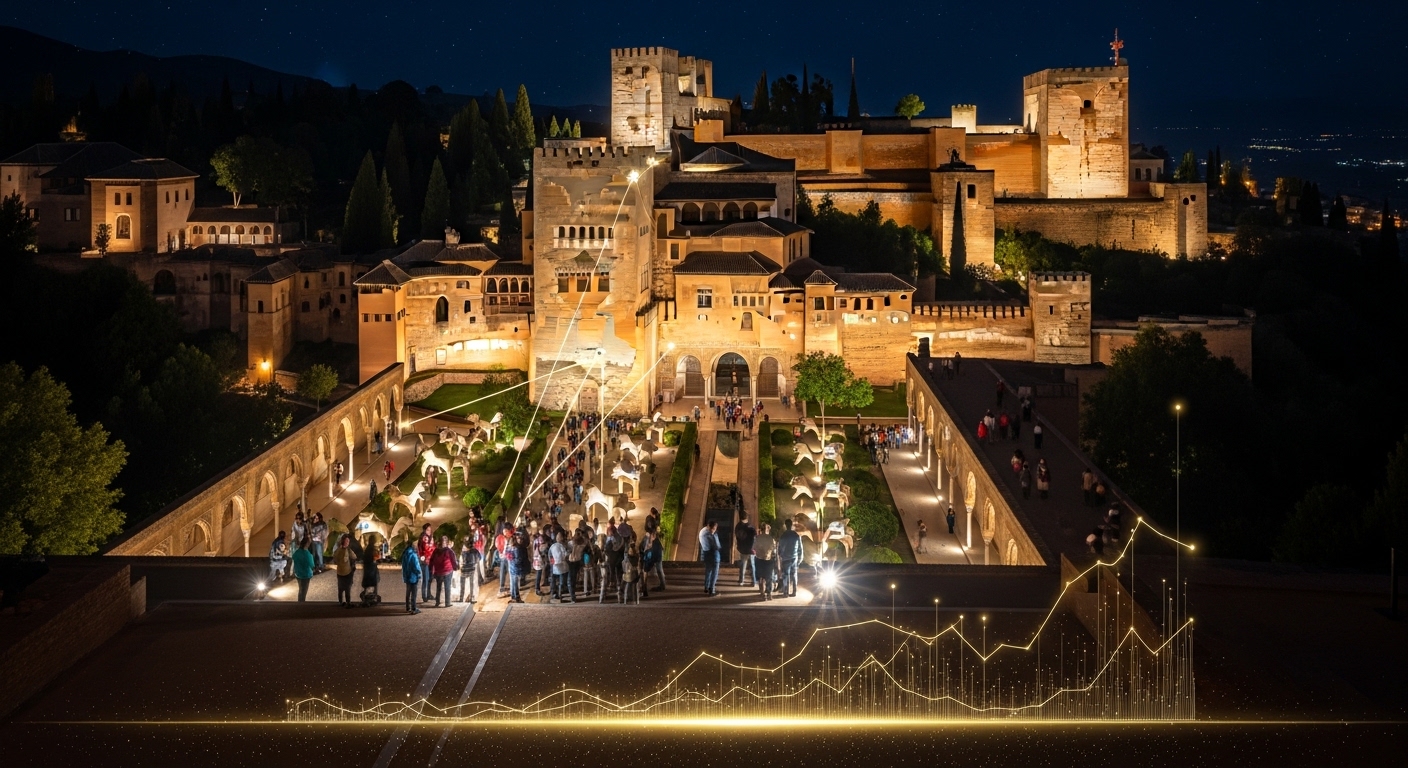
The first time a visitor steps into the softly illuminated courtyards of the Alhambra after sunset, the experience feels almost suspended in time. The crowds are quieter, the air cooler, and the intricate geometry of Nasrid architecture seems to reveal details hidden during the day. It’s not just a different visit—it’s a different product altogether. And behind that experience lies a compelling story about alhambra night tour attendance revenue and how cultural landmarks are rethinking access, demand, and monetization in the modern tourism economy.
For entrepreneurs, founders, and tech-minded readers, this isn’t just about a historic palace. It’s a case study in how legacy institutions adapt to evolving consumer behavior, optimize revenue streams, and balance exclusivity with accessibility.
The Rise of Night Tourism at the Alhambra
The Alhambra has long been one of Europe’s most visited heritage sites, drawing millions annually to Granada. But as global tourism intensified, daytime congestion began to strain both the visitor experience and the preservation of the site itself.
Night tours emerged as a strategic response. Initially introduced as a way to distribute visitor traffic more evenly, they quickly became a premium offering. Unlike daytime access, night visits are limited, curated, and designed to highlight specific sections such as the Nasrid Palaces under atmospheric lighting.
This shift transformed night tours from a logistical solution into a high-value experience—one that directly impacts attendance patterns and revenue generation.
Understanding Alhambra Night Tour Attendance Revenue
The phrase alhambra night tour attendance revenue captures a nuanced interplay between visitor numbers, pricing strategy, and experiential value. Unlike standard ticket models that rely on volume, night tours operate on scarcity.
Attendance is intentionally capped. This creates a controlled flow of visitors, reducing wear on the monument while enhancing perceived exclusivity. From a revenue perspective, this allows for higher ticket prices without requiring mass participation.
In practical terms, fewer visitors can generate comparable or even greater revenue than daytime operations. This is a powerful model for any organization managing high-demand, capacity-constrained assets.
Pricing Strategy and Perceived Value
One of the most interesting aspects of the Alhambra’s approach is how pricing aligns with perception. Night tours are typically priced higher than standard daytime tickets, yet demand remains strong.
Why? Because visitors are not just paying for access they are paying for a differentiated experience. The lighting, reduced crowds, and curated pathways create a sense of intimacy that daytime visits often lack.
This reflects a broader principle in experience-driven economies: value is not solely determined by quantity, but by quality and uniqueness. For founders building products or services, the lesson is clear premium pricing is sustainable when it is tied to a genuinely distinct offering.
Attendance Dynamics: Scarcity vs. Demand
Attendance for night tours at the Alhambra is a carefully calibrated metric. Unlike open-ended tourist attractions, capacity is fixed and tickets often sell out in advance. This creates a predictable demand curve and minimizes volatility.
From a business perspective, this model reduces uncertainty. Instead of relying on fluctuating daily foot traffic, operators can forecast revenue with greater accuracy based on pre-booked slots.
At the same time, scarcity drives urgency. Visitors are more likely to plan ahead and commit early, reducing last-minute cancellations and no-shows. This behavioral shift has direct implications for revenue stability.
Revenue Optimization in Cultural Heritage Sites
The success of the Alhambra’s night tours offers a broader insight into how cultural institutions can optimize revenue without compromising integrity. Traditionally, heritage sites have relied heavily on daytime ticket sales, often leading to overcrowding and diminishing visitor satisfaction.
By introducing tiered experiences such as night tours these institutions can diversify their income streams. This not only increases total revenue but also enhances the overall visitor experience by distributing demand more evenly.
Here’s a simplified comparison of how daytime and night tour models differ:
| Factor | Daytime Tours | Night Tours |
|---|---|---|
| Visitor Volume | High, often crowded | Limited, controlled |
| Ticket Pricing | Standard | Premium |
| Experience Quality | Broad access, less intimacy | Curated, immersive |
| Revenue Model | Volume-driven | Value-driven |
| Demand Predictability | Variable | Highly predictable |
This table illustrates why alhambra night tour attendance revenue has become a topic of interest beyond tourism it represents a shift toward smarter, more sustainable monetization.
Technology’s Role in Managing Attendance and Revenue
Behind the scenes, technology plays a critical role in making this model work. Advanced ticketing systems allow for precise control over time allocations, ensuring that visitor flow remains balanced.
Data analytics also provide insights into booking patterns, peak demand periods, and customer preferences. This enables continuous optimization of pricing and scheduling.
For tech founders, this highlights the importance of infrastructure in delivering premium experiences. The product may be historical, but the systems supporting it are thoroughly modern.
Balancing Preservation and Profitability
One of the central challenges for any heritage site is maintaining a balance between accessibility and preservation. The Alhambra, as a UNESCO World Heritage Site, must adhere to strict conservation standards.
Night tours contribute to this balance by reducing daytime pressure on the site. Fewer visitors during peak hours mean less physical strain on delicate structures and surfaces.
At the same time, the additional revenue generated from premium experiences can be reinvested into conservation efforts. This creates a sustainable cycle where tourism directly supports preservation.
Lessons for Entrepreneurs and Founders
The concept of alhambra night tour attendance revenue extends far beyond tourism. It offers valuable lessons for anyone building products or managing high-demand resources.
First, scarcity can be a powerful tool when used strategically. Limiting access doesn’t necessarily reduce revenue in fact, it can enhance it when paired with increased value.
Second, experience differentiation is key. In a crowded market, offering something unique can justify premium pricing and build stronger customer loyalty.
Third, data-driven decision-making enables continuous improvement. Understanding user behavior allows organizations to refine their offerings and maximize efficiency.
The Global Implications of Night Tourism
The success of the Alhambra’s night tours has inspired similar initiatives at other cultural landmarks around the world. From museums to historic sites, the concept of after-hours access is gaining traction.
This trend reflects a broader shift in consumer preferences. Modern travelers are seeking experiences that feel exclusive, immersive, and memorable. Standardized, high-volume tourism is giving way to more curated alternatives.
For cities like Granada, this evolution also has economic implications. Night tourism extends visitor activity beyond traditional hours, benefiting local businesses and creating a more dynamic urban environment.
Looking Ahead: The Future of Attendance and Revenue Models
As tourism continues to evolve, the principles behind alhambra night tour attendance revenue are likely to become more widely adopted. Capacity management, dynamic pricing, and experience design will play increasingly important roles in shaping how attractions operate.
There is also potential for further innovation. Augmented reality, personalized tours, and adaptive scheduling could enhance night experiences even further, creating new opportunities for engagement and revenue.
At its core, the Alhambra’s approach demonstrates that even centuries-old institutions can innovate in ways that resonate with modern audiences.
Conclusion: A Model Worth Studying
The story of the Alhambra at night is more than a tale of illuminated architecture it’s a blueprint for how cultural assets can thrive in a competitive, experience-driven economy.By carefully managing attendance, embracing premium positioning, and leveraging technology, the Alhambra has transformed a simple extension of visiting hours into a sophisticated revenue model.
For entrepreneurs and tech leaders, the takeaway is both practical and strategic. Whether you’re managing a digital platform or a physical space, the principles remain the same: create value, control supply, and design experiences that people are willing to pay for.In that sense, alhambra night tour attendance revenue is not just a metric it’s a reflection of how thoughtful innovation can turn tradition into opportunity.





Post Comment