Weller Soldering Iron Tips: Complete Guide for Precision and Performance
Introduction
When it comes to precision soldering, choosing the right tools is essential. Among these tools, weller soldering iron tips play a crucial role in ensuring clean, efficient, and reliable solder joints. Whether you are a beginner or a professional, understanding the different tip types and how to use them can significantly improve your results.
Moreover, Weller is a trusted brand known for its high-quality soldering equipment. Therefore, selecting the right weller soldering iron tips not only enhances performance but also extends the life of your equipment. Additionally, proper maintenance and care can prevent common issues such as poor heat transfer and oxidation. In this guide, we will explore various types of Weller tips, their uses, and practical tips to help you achieve better soldering outcomes.
Key Takeaways
- weller soldering iron tips come in various shapes for different applications.
- Choosing the right soldering tip improves accuracy and efficiency.
- Regular cleaning and maintenance extend tip lifespan.
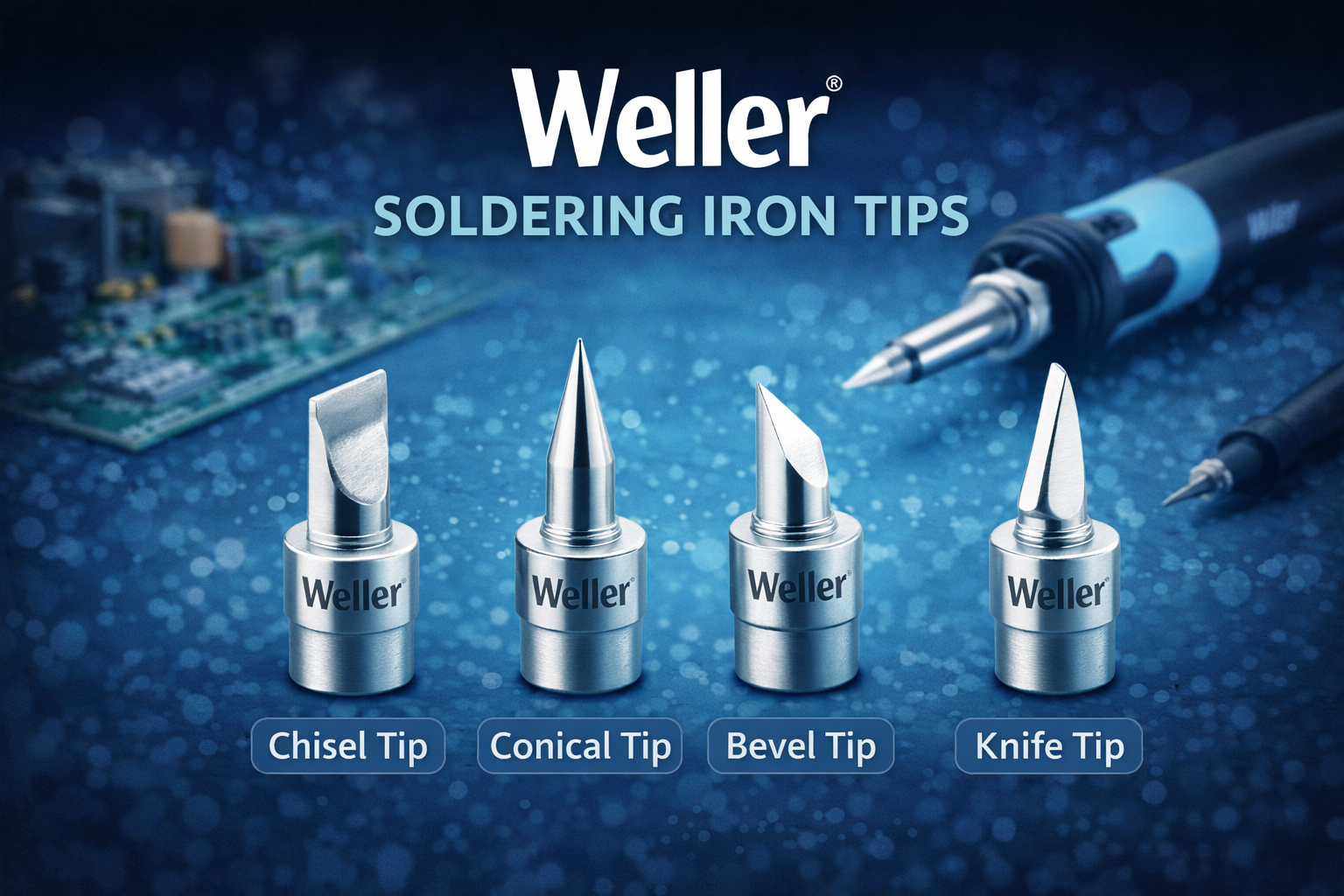
- Soldering tip types include chisel, conical, bevel, and more.
- Proper temperature control ensures better solder joints.
Types of Weller Soldering Iron Tips
Selecting the correct Weller soldering tip depends on your specific project. Each tip shape serves a unique purpose.
Conical Tips
Conical tips have a pointed shape, making them ideal for precision work. Therefore, they are commonly used for:
- Fine electronics
- Small solder joints
- Detailed circuit board work
However, they provide less heat transfer compared to broader tips.
Chisel Tips
Chisel tips are flat and wide, allowing better heat transfer. As a result, they are suitable for:
- General soldering tasks
- Larger components
- Through-hole soldering
Because of their versatility, they are among the most commonly used tips.
Bevel Tips
Bevel tips have an angled surface, which helps hold more solder. Consequently, they are useful for:
- Drag soldering
- Surface-mount devices (SMD)
- Quick solder application
Knife Tips
Knife tips feature a blade-like edge. Therefore, they are ideal for:
- Cutting solder bridges
- Working in tight spaces
- Specialized soldering tasks
How to Choose the Right Weller Soldering Tip
Choosing the correct tip is essential for achieving optimal results.
Consider the Application
First, identify the type of work you will perform. For example:
- Use conical tips for precision
- Use chisel tips for general tasks
- Use bevel tips for SMD work
Match Tip Size to Component
Additionally, the tip size should match the component size. A larger tip transfers more heat, while a smaller tip offers better control.
Temperature Compatibility
Ensure that the tip is compatible with your soldering station’s temperature settings. Consequently, this helps maintain consistent performance.
Benefits of Using Weller Soldering Iron Tips
High Quality and Durability
Weller tips are made from high-quality materials. Therefore, they offer long-lasting performance and resistance to wear.
Excellent Heat Transfer
Because of their design, these tips provide efficient heat transfer. As a result, solder melts quickly and evenly.
Wide Variety
Weller offers a wide range of tip shapes and sizes. Consequently, users can find the perfect tip for any application.
Maintenance Tips for Weller Soldering Tips
Proper maintenance is essential for extending the life of your soldering iron tips.
Regular Cleaning
Clean your tip frequently using:
- A damp sponge
- Brass wool cleaner
This prevents oxidation and buildup.
Tinning the Tip
Tinning involves coating the tip with a thin layer of solder. Therefore, it improves heat transfer and protects the tip.
Avoid Overheating
Excessive heat can damage the tip. Consequently, always use the recommended temperature settings.
Proper Storage
When not in use, store your soldering iron properly. Additionally, turn off the station to prevent unnecessary wear.
Common Mistakes to Avoid
Using the Wrong Tip
Using an incorrect tip can lead to poor solder joints. Therefore, always choose the appropriate tip for the task.
Neglecting Maintenance
Failing to clean and tin the tip reduces its lifespan. As a result, performance declines over time.
Applying Too Much Pressure
Excessive pressure can damage both the tip and the components. Instead, let heat do the work.
Weller Soldering Tips vs Other Brands
| Feature | Weller Tips | Other Brands |
|---|---|---|
| Quality | High | Varies |
| Durability | Long-lasting | Moderate |
| Variety | Wide range | Limited options |
| Performance | Consistent | Inconsistent |
Clearly, Weller stands out for reliability and performance.
Tips for Better Soldering Results
Use the Right Temperature
Maintaining the correct temperature ensures proper solder flow. Therefore, adjust settings based on the task.
Keep the Tip Clean
A clean tip improves heat transfer and prevents defects.
Practice Proper Technique
Hold the iron correctly and apply solder evenly. Additionally, practice improves precision over time.
Conclusion
Weller soldering iron tips are essential tools for achieving high-quality soldering results. By selecting the right tip, maintaining it properly, and using correct techniques, you can significantly improve your work efficiency and precision.
Moreover, investing in high-quality soldering tips ensures durability and consistent performance. Whether you are working on simple repairs or complex electronics, the right tip makes a noticeable difference. Therefore, take the time to choose wisely and care for your tools to achieve the best possible results in every project.





Post Comment