Progress Learning: A Smart Approach to Continuous Growth
Introduction
In today’s fast-changing world, learning is no longer a one-time event but a continuous journey. Therefore, the concept of progress learning has become increasingly important for students, professionals, and lifelong learners. Instead of focusing only on final results, progress learning emphasizes steady improvement, skill development, and consistent growth over time.
Moreover, this approach encourages learners to track their development, adapt their strategies, and stay motivated throughout the process. As a result, individuals can build confidence and achieve long-term success more effectively. In addition, continuous learning methods help people stay relevant in competitive environments, whether in education or the workplace. Consequently, understanding how progress learning works can transform the way you acquire knowledge and develop new skills. In this article, we will explore the meaning, benefits, strategies, and practical tips for mastering progressive learning techniques.
Key Takeaways
- Progress learning focuses on gradual improvement rather than instant results.
- Continuous learning strategies help build long-term skills and knowledge.
- Tracking progress increases motivation and accountability.
- Learning development techniques improve retention and understanding.
- Consistency and adaptability are key to successful progress learning.
What Is Progress Learning?
Progress learning is a method of education that emphasizes gradual improvement through consistent effort and regular feedback. Instead of aiming for perfection, learners focus on making small, measurable advancements over time.
Core Principles of Progress Learning
This approach is built on several key principles:
- Continuous improvement
- Regular feedback and assessment
- Goal setting and tracking
- Adaptability in learning methods
Because of these principles, progress learning supports sustainable and effective skill development.
Benefits of Progress Learning
Improved Retention and Understanding
When learning happens gradually, information is easier to retain. Therefore, learners can understand concepts more deeply instead of memorizing them temporarily.
Increased Motivation
Tracking small achievements creates a sense of accomplishment. Consequently, learners stay motivated and engaged throughout their journey.
Better Skill Development
Because progress learning focuses on consistent practice, it helps build stronger and more reliable skills over time.
Reduced Learning Stress
Instead of feeling overwhelmed by large goals, learners can focus on manageable steps. As a result, stress and anxiety are significantly reduced.
Key Strategies for Effective Progress Learning
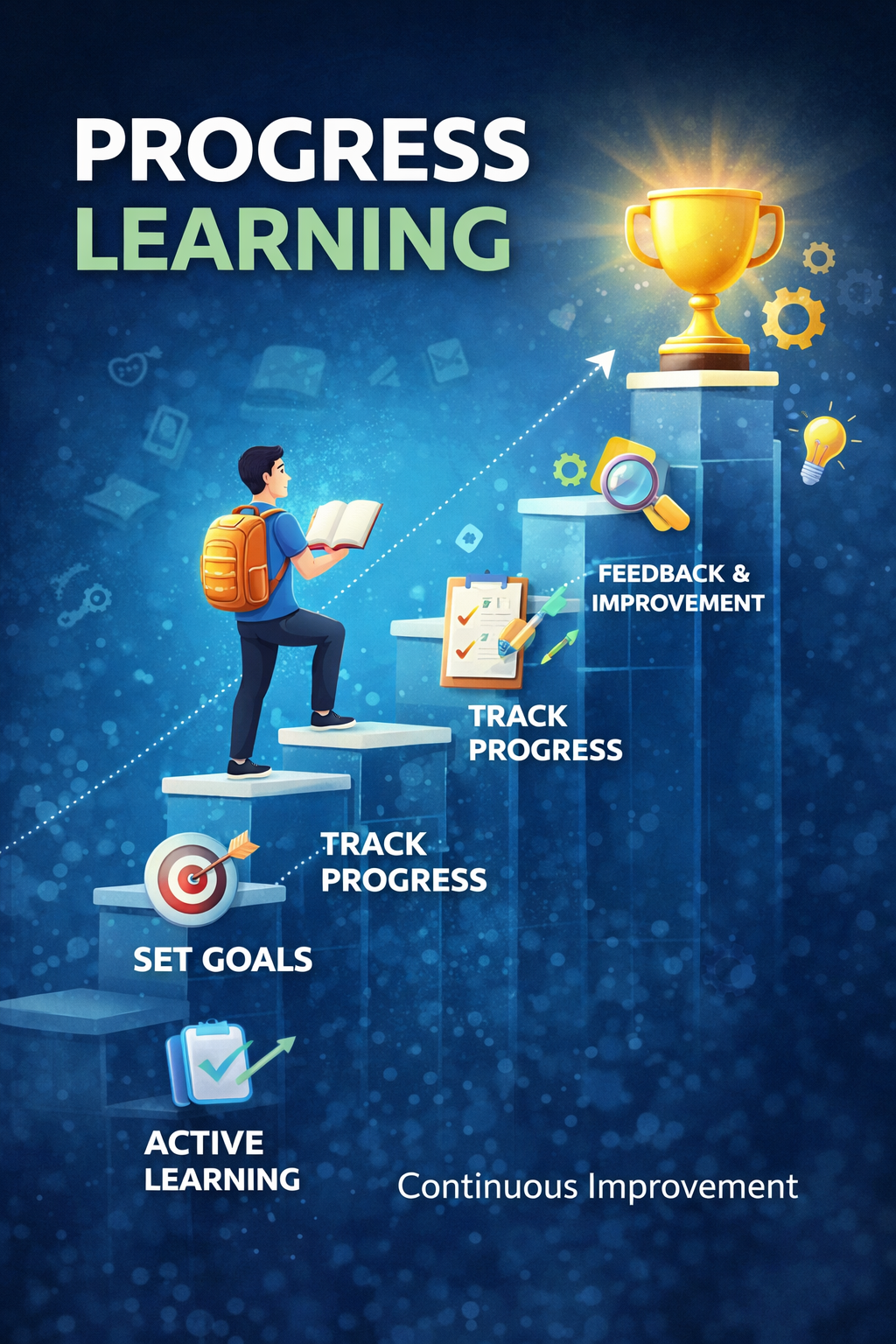
Set Clear and Achievable Goals
First, define specific learning objectives. For example, instead of saying “learn coding,” set a goal like “complete one coding lesson daily.”
Additionally, breaking goals into smaller tasks makes them easier to achieve.
Track Your Progress
Monitoring your progress is essential. Therefore, use tools such as:
- Learning journals
- Progress tracking apps
- Checklists
Because tracking provides visual feedback, it helps maintain motivation.
Use Active Learning Techniques
Active learning involves engaging with the material rather than passively reading or listening.
Examples include:
- Practicing problems
- Teaching others
- Participating in discussions
Consequently, active learning improves understanding and retention.
Tools and Techniques for Progress Learning
Digital Learning Platforms
Online platforms provide structured learning paths and progress tracking features.
Popular tools include:
- Educational apps
- Online courses
- Learning management systems
Spaced Repetition
Spaced repetition involves reviewing information at increasing intervals. Therefore, it enhances long-term memory retention.
Feedback Systems
Regular feedback helps identify strengths and areas for improvement. As a result, learners can adjust their strategies effectively.
Progress Learning in Education
Student Learning Development
In schools, Progressive education methods help students build knowledge step by step. Teachers can assess performance regularly and provide personalized guidance.
Personalized Learning
Because every student learns differently, personalized learning plans allow individuals to Progressive education at their own pace.
Consequently, this approach improves overall academic performance.
Progress Learning in the Workplace
Professional Skill Development
In the workplace, Progressive education supports continuous skill improvement. Employees can learn new tools, technologies, and processes gradually.
Career Growth
Because industries evolve rapidly, continuous learning is essential for career advancement. Therefore, Progressive education helps professionals stay competitive.
Training Programs
Many organizations implement training programs that focus on gradual skill development and regular assessments.
Common Challenges in Progress Learning
Lack of Consistency
Without regular practice, progress may slow down. Therefore, maintaining consistency is crucial.
Unrealistic Expectations
Expecting immediate results can lead to frustration. Instead, focus on gradual improvement.
Limited Feedback
Without feedback, it is difficult to measure progress. Consequently, learners should seek regular evaluations.
Tips to Improve Your Learning Progress
Stay Consistent
Consistency is key to success. Therefore, dedicate time daily or weekly to learning activities.
Celebrate Small Wins
Recognizing small achievements boosts motivation and confidence.
Adapt Your Methods
If a strategy is not working, try a different approach. Flexibility improves learning outcomes.
Maintain a Growth Mindset
Believing that skills can improve with effort encourages persistence and resilience.
Progress Learning vs Traditional Learning
| Progressive education | Traditional Learning |
|---|---|
| Focus on growth | Focus on final results |
| Continuous feedback | Limited feedback |
| Flexible pace | Fixed pace |
| Skill development | Memorization |
Clearly, Progressive education offers a more dynamic and effective approach.
Future of Progress Learning
The future of Progressive education is closely linked to technology and innovation. As digital tools become more advanced, personalized learning experiences will continue to improve.
Emerging Trends
- AI-powered learning platforms
- Adaptive learning systems
- Gamification of education
- Real-time progress tracking
Consequently, these advancements will make learning more engaging and efficient.
Conclusion
Progressive education is a powerful approach that focuses on continuous improvement, consistency, and long-term growth. By setting clear goals, tracking process, and using effective learning strategies, individuals can achieve meaningful results without feeling overwhelmed.
Moreover, this method not only enhances knowledge retention but also builds confidence and motivation. Whether in education or professional development, Progressive education provides a flexible and sustainable path to success.
Ultimately, by embracing continuous learning techniques and maintaining a growth mindset, you can unlock your full potential and achieve lasting personal and professional growth.



Post Comment