Blockchain in Intellectual Property: Revolutionizing Digital Rights Protection
Introduction
In the digital era, protecting creative work and intellectual assets has become increasingly complex. With the rapid growth of online content, issues like copyright infringement, piracy, and unauthorized use are more common than ever. Therefore, businesses and creators are searching for innovative solutions to safeguard their work. One such solution gaining attention is blockchain in intellectual property management.
Moreover, blockchain technology offers a decentralized and transparent system that records data securely. As a result, it provides a reliable way to track ownership, verify authenticity, and manage digital rights. Additionally, blockchain-based intellectual property systems can reduce disputes and improve trust among creators, businesses, and consumers. Consequently, this technology is transforming how intellectual property is registered, monitored, and enforced. In this article, we will explore how blockchain works in IP protection, its benefits, challenges, and future potential.
Key Takeaways
- Blockchain in intellectual property enhances transparency and security in IP management.
- Decentralized IP systems help track ownership and prevent copyright infringement.
- Smart contracts for IP automate licensing and royalty payments.
- Blockchain improves trust and reduces disputes in digital rights management.
- Adoption challenges include legal frameworks and technological complexity.
What Is Blockchain in Intellectual Property?
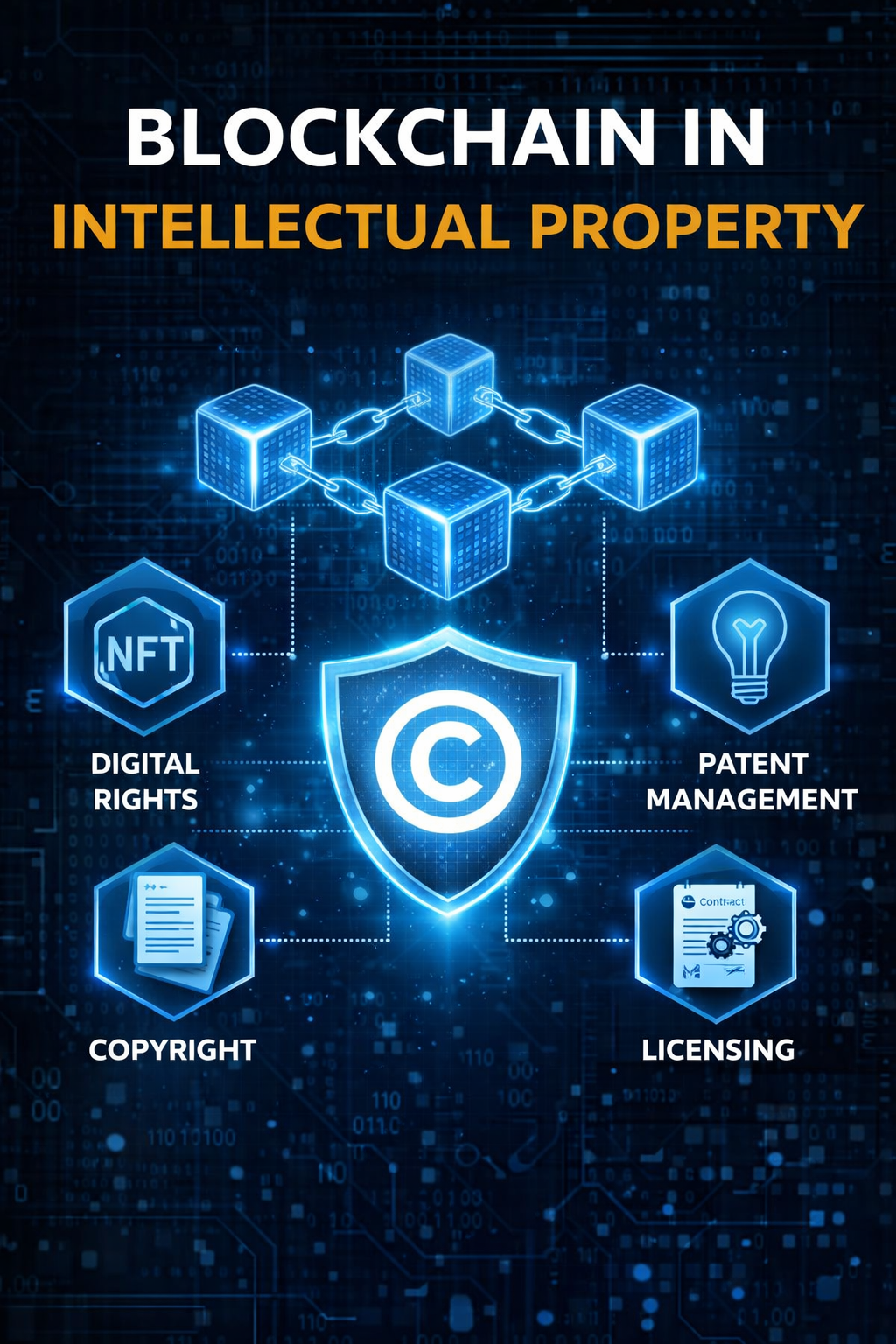
Blockchain in intellectual property refers to the use of blockchain in intellectual property to record, manage, and protect ownership rights for creative and innovative works. These works may include music, art, software, patents, and trademarks.
How Blockchain Technology Works
Blockchain is a distributed ledger system that records transactions across multiple computers. Each transaction is stored in a “block” and linked to previous blocks, creating a secure and tamper-proof chain.
Key features include:
- Decentralization (no central authority)
- Transparency (publicly verifiable records)
- Immutability (data cannot be altered)
- Security through cryptography
Because of these features, blockchain is well-suited for managing intellectual property rights.
How Blockchain Protects Intellectual Property
Proof of Ownership
One of the main benefits of blockchain IP protection is the ability to establish proof of ownership. When a creator uploads their work to a blockchain system, a timestamped record is created.
Consequently, this record serves as evidence of ownership and creation date.
Prevention of Copyright Infringement
Blockchain systems allow creators to track how their content is used. Therefore, unauthorized usage can be identified more easily.
Additionally, digital assets can be embedded with unique identifiers, making them traceable across platforms.
Transparent Licensing
Licensing agreements can be stored and managed on blockchain platforms. As a result, all parties have access to the same information, reducing misunderstandings and disputes.
Role of Smart Contracts in IP Management
Smart contracts are self-executing agreements coded on the blockchain. They automatically enforce rules and conditions without the need for intermediaries.
Automated Royalty Payments
For example, when a song or digital artwork is used, a smart contract can automatically distribute royalties to the creator.
This ensures timely and accurate payments.
Efficient Licensing Agreements
Smart contracts simplify licensing by:
- Defining usage rights
- Automating permissions
- Reducing administrative work
Therefore, they streamline IP management processes.
Benefits of blockchain in intellectual property
Enhanced Security
Because blockchain data is encrypted and decentralized, it is highly secure. Consequently, it reduces the risk of data tampering and unauthorized access.
Increased Transparency
All transactions on the blockchain are visible and verifiable. Therefore, stakeholders can track ownership and usage easily.
Reduced Costs
Traditional IP management often involves intermediaries such as lawyers and agencies. However, blockchain reduces reliance on these intermediaries, lowering costs.
Faster Processes
Blockchain systems enable real-time updates and transactions. As a result, IP registration and licensing become more efficient.
Use Cases of Blockchain in IP
Digital Content Protection
Artists, musicians, and writers can register their work on blockchain platforms. Consequently, they can prove ownership and monitor usage.
Patent Management
Blockchain can streamline patent registration and verification processes. Therefore, it reduces duplication and fraud.
Trademark Protection
Businesses can use blockchain to secure trademarks and monitor brand usage across markets.
NFT Integration
Non-Fungible Tokens (NFTs) are a popular application of blockchain in IP. They represent ownership of unique digital assets.
For example:
| Application | Benefit |
|---|---|
| Digital art NFTs | Proof of authenticity |
| Music NFTs | Direct revenue for artists |
| Collectibles | Verified ownership |
Challenges of Blockchain in Intellectual Property
Legal and Regulatory Issues
Although blockchain offers many benefits, legal frameworks are still evolving. Therefore, integrating blockchain with existing IP laws can be complex.
Technical Complexity
Implementing blockchain systems requires technical expertise. Consequently, smaller organizations may face challenges in adoption.
Scalability Concerns
As blockchain networks grow, scalability can become an issue. However, ongoing innovations aim to address this limitation.
Future of Blockchain in IP Protection
The future of blockchain in intellectual property looks promising. As technology evolves, more industries are expected to adopt blockchain-based solutions.
Integration with AI
Combining blockchain with artificial intelligence can improve content tracking and infringement detection.
Global IP Systems
Blockchain has the potential to create unified global IP registries. Therefore, it can simplify international copyright protection.
Increased Adoption
As awareness grows, more creators and businesses will use blockchain for IP management.
Consequently, this technology will play a key role in shaping the future of digital rights.
Conclusion
Blockchain in intellectual property is transforming how creators and businesses protect their work in the digital age. By providing secure, transparent, and decentralized systems, blockchain enhances ownership verification, reduces disputes, and streamlines licensing processes.
Moreover, features like smart contracts and NFTs offer innovative ways to manage and monetize intellectual assets. Although challenges such as legal complexities and technical barriers exist, the benefits of blockchain technology continue to drive its adoption.
Ultimately, as industries continue to embrace digital transformation, blockchain will become an essential tool for protecting intellectual property and ensuring fair value for creators worldwide.





Post Comment