Automated Car Wash: A Complete Guide to Modern Car Cleaning Technology
Introduction
Keeping your vehicle clean is essential not only for appearance but also for long-term maintenance. However, traditional hand washing can take a lot of time and effort. Therefore, many car owners are now choosing an automated car wash as a faster and more convenient solution. These modern systems use advanced machines, sensors, and cleaning technologies to wash vehicles efficiently while minimizing human labor.
Moreover, an automatic car wash system is designed to clean vehicles quickly and consistently. Because the process is controlled by automated equipment, it reduces water waste and ensures a thorough wash every time. In addition, many modern facilities offer eco-friendly cleaning solutions and high-pressure washing technology. As a result, automated car washing services are becoming increasingly popular among busy drivers and car enthusiasts alike. In this guide, we will explore how automated car washes work, their types, benefits, and why they are transforming the vehicle cleaning industry.
Key Takeaways
-
Automated car wash systems provide quick, efficient, and consistent vehicle cleaning.
-
Automatic vehicle wash technology uses sensors, brushes, and high-pressure water jets.
-
Touchless car wash systems reduce the risk of scratches on vehicle surfaces.
-
Modern car wash automation saves water and improves cleaning efficiency.
-
Automatic car wash facilities offer convenient and time-saving vehicle maintenance.
What Is an Automated Car Wash?
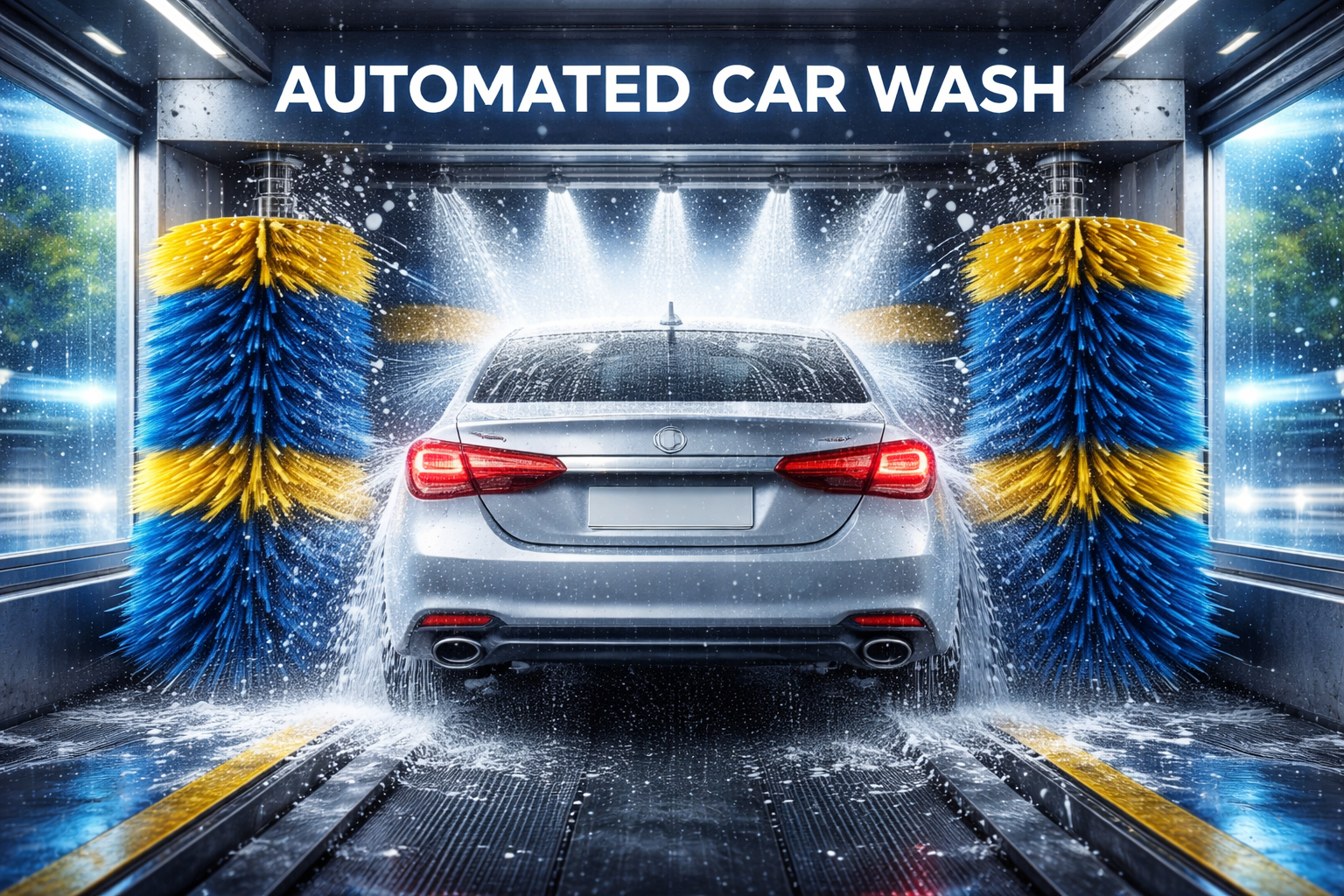
An automated car wash is a mechanical system that cleans vehicles using automated equipment rather than manual labor. Typically, these systems use conveyor belts, rotating brushes, high-pressure water jets, and specialized detergents to remove dirt and grime from vehicles.
Unlike traditional hand washing, automated systems operate through programmed sequences. As a result, each vehicle goes through a series of cleaning stages designed to ensure thorough washing and rinsing.
Key Features of Automated Car Wash Systems
-
Computer-controlled washing process
-
High-pressure water spray systems
-
Rotating brushes or touchless cleaning technology
-
Automated drying systems
-
Efficient water recycling technology
Because of these features, automated car wash technology delivers consistent results while reducing the time required to clean vehicles.
How an Automated Car Wash Works
The process of an automatic car wash system is designed to clean vehicles efficiently through multiple stages. Although the exact process may vary depending on the facility, most automated systems follow a similar sequence.
1. Vehicle Entry and Positioning
First, the vehicle enters the automated car wash tunnel or bay. In conveyor-based systems, the car is placed on a track that slowly moves it through different washing stations.
Meanwhile, sensors detect the vehicle’s size and position to ensure proper alignment. Consequently, the system adjusts the washing equipment to match the vehicle’s dimensions.
2. Pre-Wash and Soap Application
Next, the system sprays the vehicle with water to loosen dirt and debris. Afterward, specialized cleaning detergents are applied using automated sprayers.
These cleaning solutions break down road grime, mud, and grease effectively. As a result, the vehicle becomes easier to clean during the following stages.
3. Brushing or Touchless Cleaning
At this stage, the vehicle undergoes the main cleaning process.
There are two common approaches:
Brush-Based Washing
-
Rotating foam brushes scrub the vehicle surface.
-
Soft materials help remove stubborn dirt while protecting paint.
Touchless Car Wash
-
High-pressure water jets clean the vehicle without physical contact.
-
Specialized chemicals dissolve dirt and contaminants.
Because touchless systems avoid direct contact, they reduce the risk of surface scratches.
4. Rinse and Drying
Finally, the system rinses the vehicle with clean water to remove remaining soap and residue. Then powerful air dryers blow water off the vehicle surface.
Some facilities also apply protective wax coatings to enhance shine and protect the paint.
Types of Automated Car Wash Systems
There are several types of automated vehicle wash systems, each designed for different needs and preferences.
Tunnel Car Wash
Tunnel car washes are one of the most common automated systems. In this setup, vehicles move through a long tunnel where multiple cleaning stages occur sequentially.
Key features include:
-
Conveyor belt vehicle movement
-
Multiple cleaning stations
-
High throughput for busy locations
Because of their efficiency, tunnel systems are commonly used in commercial car wash businesses.
In-Bay Automatic Car Wash
In this system, the vehicle remains stationary while robotic arms move around it. The equipment sprays water, detergent, and air to clean and dry the car.
Advantages include:
-
Compact design
-
Lower installation cost
-
Suitable for small locations
Touchless Car Wash
A touchless automatic car wash uses high-pressure water and cleaning chemicals without brushes. This system is ideal for drivers who want to avoid physical contact with their vehicle’s paint.
Benefits include:
-
Reduced risk of scratches
-
Gentle cleaning process
-
Modern chemical cleaning technology
Benefits of Automated Car Wash Systems
Automated car washing technology offers numerous advantages for both car owners and businesses.
Time Efficiency
First and foremost, automated car washes save significant time. Most systems complete the entire cleaning process within a few minutes.
Consequently, drivers can maintain clean vehicles without spending hours washing them manually.
Consistent Cleaning Results
Because automated systems follow programmed sequences, they deliver consistent results every time. This consistency ensures that vehicles are cleaned thoroughly and evenly.
Water Conservation
Many modern automatic car wash facilities use water recycling systems. These systems filter and reuse water, reducing overall water consumption.
As a result, automated car washing can be more environmentally friendly than traditional hand washing.
Convenience and Accessibility
Automated car wash stations are widely available and easy to use. Drivers simply drive into the wash bay, select a cleaning package, and let the system do the work.
Therefore, automated systems provide a hassle-free cleaning solution for busy individuals.
The Future of Automated Car Wash Technology
The car wash industry continues to evolve as new technologies emerge. In the future, automated car wash systems will likely incorporate advanced innovations such as artificial intelligence, improved sensors, and eco-friendly cleaning solutions.
For example, smart car wash systems may analyze vehicle conditions and automatically select the best cleaning method. Additionally, modern facilities may use biodegradable detergents and energy-efficient equipment to reduce environmental impact.
Furthermore, contactless payment systems and mobile apps are making automated car wash services even more convenient for customers.
Conclusion
Automated car wash technology has transformed the way vehicles are cleaned and maintained. By combining advanced machinery, high-pressure cleaning systems, and automated processes, these systems provide fast, efficient, and reliable vehicle washing solutions.
Moreover, automated car washes save time, conserve water, and deliver consistent results. As technology continues to improve, these systems will become even more efficient and environmentally friendly.





Post Comment