Nahttypen The Hidden Architecture Behind Precision, Durability, and Design
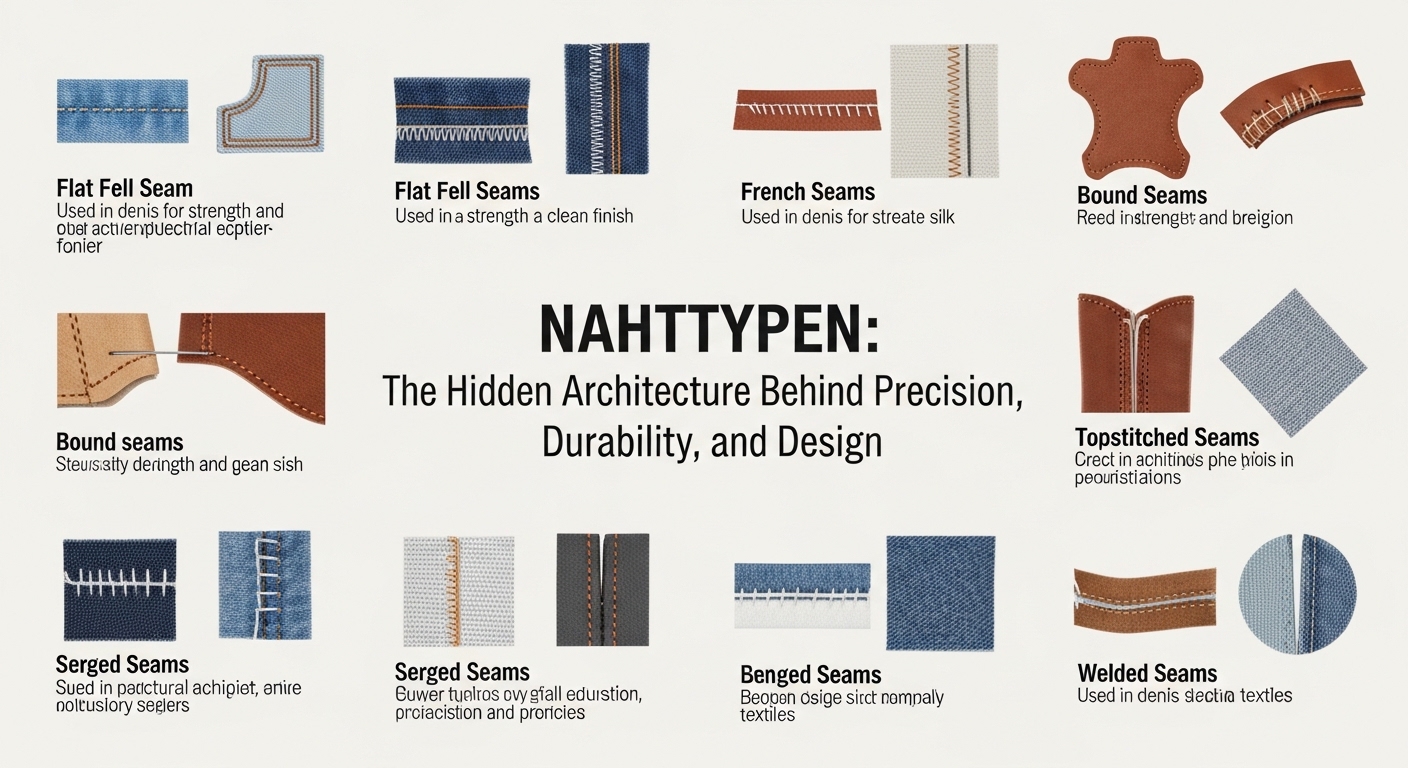
It’s easy to admire a finished product a tailored jacket, a high-performance backpack, or even the interior of a luxury car without ever thinking about what holds it all together. The fabric, the design, the branding may catch your eye, but the real story often lies in something far less visible: the seams. In the world of textiles and manufacturing, nahttypen or seam types are the quiet determinants of strength, flexibility, and longevity.
For entrepreneurs, product designers, and tech-minded builders, understanding nahttypen is more than a technical detail. It’s a strategic advantage. Whether you’re launching a fashion label, developing wearable tech, or scaling a manufacturing operation, the way materials are joined can define the success or failure of your product.
Why Nahttypen Matter More Than You Think
At first glance, seams might seem like a purely functional element. But in reality, they sit at the intersection of engineering and design. The right seam can enhance durability, improve comfort, and even elevate the aesthetic of a product. The wrong one can lead to early wear, customer dissatisfaction, and costly returns.
Nahttypen determine how a product behaves under stress. For example, a seam used in athletic wear must withstand repeated stretching, while one in formal clothing prioritizes a clean, nearly invisible finish. These choices are not arbitrary they are deeply tied to use case, material properties, and brand positioning.For founders, this translates into a broader lesson: small structural decisions often have outsized impact.
The Evolution of Seam Design
The concept of nahttypen has evolved alongside advances in materials and manufacturing technologies. Traditional hand-sewn seams were designed for practicality and repairability. With the industrial revolution came standardized stitching methods, enabling mass production without sacrificing consistency.
Today, innovation in textiles—such as smart fabrics and sustainable materials has pushed seam design into new territory. Heat-sealed seams, ultrasonic bonding, and adhesive technologies are redefining what seams can do.
This evolution reflects a larger trend seen across industries: as materials become more advanced, the methods used to assemble them must evolve in parallel.
Understanding the Core Types of Nahttypen
While there are many variations, most nahttypen fall into a few core categories, each with distinct characteristics and applications.
Plain seams are the most common, used in everything from everyday clothing to basic upholstery. They are simple, cost-effective, and versatile, but may require reinforcement for high-stress applications.
French seams, on the other hand, are known for their clean finish. By enclosing raw edges within the seam, they offer both durability and a refined appearance ideal for premium garments.
Flat-felled seams are often found in denim and workwear. They provide exceptional strength and are resistant to fraying, making them suitable for products that endure heavy use.
Bound seams use an additional strip of fabric to encase the edges, enhancing both durability and visual appeal. These are frequently used in high-end or specialized products.Each of these nahttypen represents a different balance between function, cost, and aesthetics.
A Practical Comparison
To see how these seam types differ in real-world applications, consider the following overview:
| Seam Type | Key Characteristics | Typical Use Cases | Strategic Advantage |
|---|---|---|---|
| Plain Seam | Simple, quick to produce | Everyday garments, basic products | Cost efficiency and scalability |
| French Seam | Clean finish, enclosed edges | Luxury clothing, delicate fabrics | Premium appearance and durability |
| Flat-Felled Seam | Double-stitched, highly durable | Denim, uniforms, outdoor gear | Strength and long-term reliability |
| Bound Seam | Edges covered with binding material | High-end apparel, technical textiles | Enhanced durability and design flexibility |
For product developers, this table highlights an important reality: seam selection is not just a technical choice it’s a strategic one.
Nahttypen in the Age of Smart Products
As technology integrates more deeply into physical products, the role of nahttypen becomes even more critical. Wearable devices, for instance, require seams that can accommodate embedded sensors without compromising comfort or performance.
This has led to the rise of advanced seam technologies, such as seamless knitting and bonded seams. These methods reduce bulk, improve flexibility, and create new possibilities for design.
For tech founders, this is a reminder that hardware innovation often depends on mastering seemingly small details. A breakthrough product isn’t just about the electronics it’s about how every component works together.
Sustainability and Seam Choices
Sustainability is no longer optional it’s a defining factor in modern product development. Nahttypen play a surprisingly important role in this conversation.
Certain seam types make products easier to repair, extending their lifespan and reducing waste. Others facilitate recycling by simplifying material separation. Conversely, overly complex or adhesive-heavy seams can make recycling more difficult.
Forward-thinking brands are beginning to consider seam design as part of their sustainability strategy. By choosing nahttypen that support durability and recyclability, they align their products with both environmental goals and consumer expectations.
Lessons for Entrepreneurs and Builders
The study of nahttypen offers broader insights that extend beyond textiles.
First, it underscores the importance of foundational decisions. Just as a seam holds a garment together, core design choices hold a product or even a company together.
Second, it highlights the value of alignment. The best seam is not the most complex or expensive one, but the one that fits the product’s purpose. This principle applies equally to business strategy.
Finally, it demonstrates how innovation often happens at the margins. While headlines focus on major breakthroughs, real progress frequently comes from refining the details.
Bridging Design and Engineering
One of the most compelling aspects of nahttypen is how they bridge the gap between design and engineering. A seam must satisfy both aesthetic and functional requirements, making it a point of collaboration between different disciplines.
In modern organizations, this kind of cross-functional thinking is increasingly important. Designers, engineers, and product managers must work together to create solutions that are both beautiful and effective.
Nahttypen serve as a microcosm of this collaboration. They show how diverse perspectives can come together to create something greater than the sum of its parts.
The Future of Nahttypen
Looking ahead, the future of nahttypen will likely be shaped by three key forces: automation, material innovation, and sustainability.
Automated manufacturing processes will enable greater precision and consistency, reducing defects and improving scalability. New materials will require new seam techniques, pushing the boundaries of what’s possible. And sustainability will continue to drive demand for seams that support longer product lifecycles and easier recycling.
For entrepreneurs and innovators, staying ahead of these trends is essential. Understanding nahttypen today can provide a competitive edge tomorrow.
Closing Thoughts
The next time you pick up a product whether it’s a jacket, a bag, or a piece of wearable technology take a closer look at the seams. They may not be the most visible feature, but they are among the most important.
Nahttypen remind us that success is often built on details that go unnoticed. For founders and builders, this is both a challenge and an opportunity. By paying attention to the fundamentals, you can create products that are not only functional, but enduring.
In a world driven by rapid innovation, it’s easy to focus on what’s new. But as nahttypen demonstrate, sometimes the most powerful insights come from understanding what holds everything together.










Post Comment