Delta Flight DL275 Diverted: What It Reveals About Modern Aviation Decision-Making and Passenger Trust
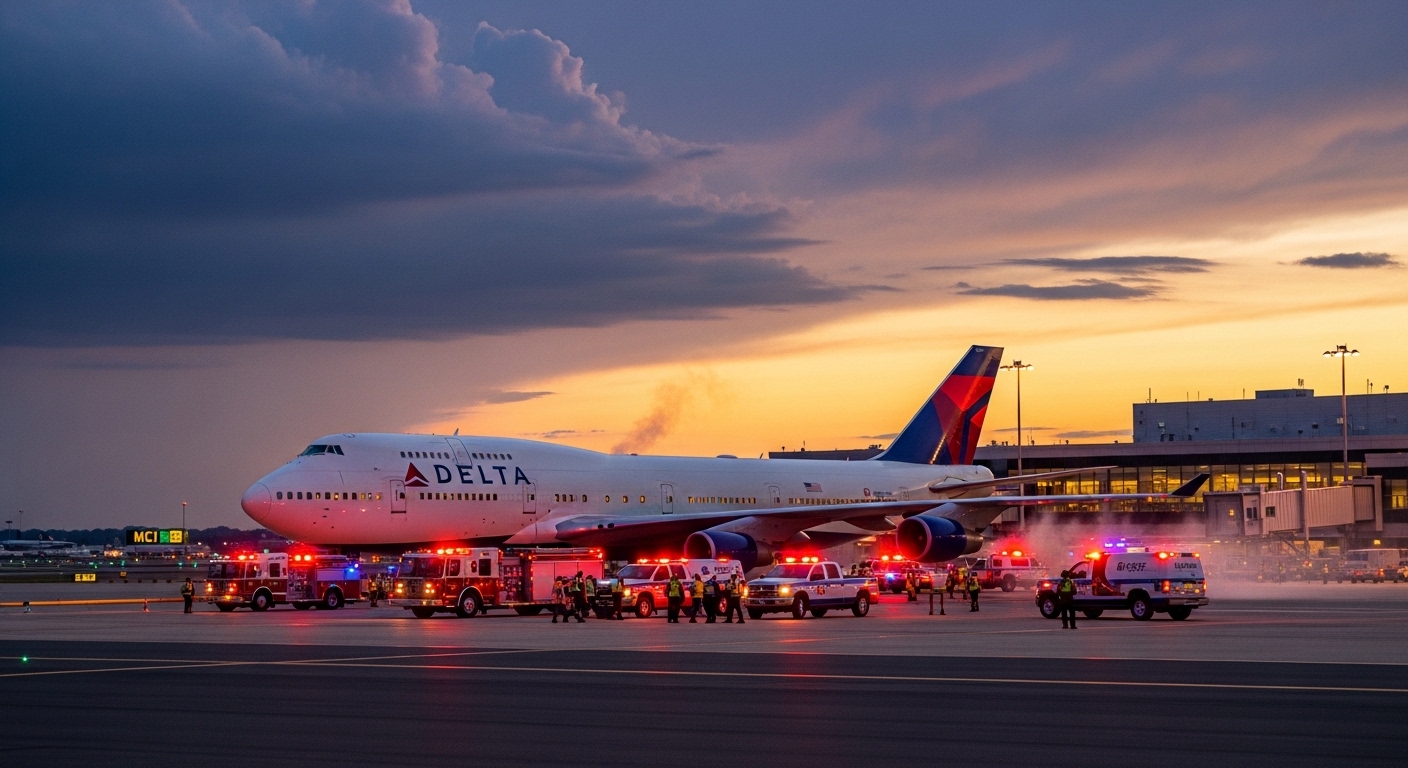
It started, as most journeys do, with routine. Boarding announcements echoed through the terminal, passengers filed into their seats, and Delta Flight DL275 taxied toward the runway with the quiet predictability that defines commercial air travel. For many onboard, it was just another trip—business meetings ahead, family reunions waiting, deadlines looming. But somewhere between departure and destination, something shifted. The aircraft changed course. The message came through: the flight had been diverted.The phrase “delta flight dl275 diverted” quickly spread beyond the cabin, rippling across social media, news alerts, and aviation forums. For passengers, it was an unexpected interruption. For observers, it became a case study. And for the aviation industry, it reflected something deeperhow decisions are made in real time when safety, logistics, and human experience intersect.
The Anatomy of a Diversion
A diversion can be triggered by a wide range of issues. These include sudden weather deterioration, technical irregularities, medical emergencies, or operational constraints such as runway congestion. While passengers often experience the event as abrupt or confusing, behind the scenes it is a calculated response designed to minimize risk.
Decision-Making at 35,000 Feet
Modern aviation operates on layered decision frameworks. Pilots are trained to follow strict protocols, but they also rely on judgment shaped by experience. When a situation arises mid-flight, the cockpit becomes a hub of rapid analysis data is assessed, alternatives are considered, and communication lines remain open with ground support.
In the case of delta flight dl275 diverted, the decision would have involved evaluating variables such as fuel reserves, nearest suitable airports, passenger safety, and regulatory requirements. These are not isolated considerations; they interact dynamically.
A simplified view of diversion decision factors looks like this:
| Factor | Consideration | Impact on Decision |
|---|---|---|
| Weather Conditions | Storms, turbulence, visibility | May require immediate rerouting |
| Technical Issues | Engine alerts, system anomalies | Prioritizes nearest safe landing |
| Medical Emergencies | Passenger or crew health crises | Diverts to fastest accessible airport |
| Fuel Management | Remaining fuel vs alternate routes | Limits available options |
| Air Traffic Control | Congestion, runway availability | Influences destination choice |
This table simplifies what is, in reality, a complex and high-stakes calculation. The key insight is that diversions are rarely about a single issue they are about managing multiple risks simultaneously.
Passenger Experience in an Unplanned Moment
For those onboard, a diversion disrupts more than just travel plans. It interrupts expectations. In a world optimized for efficiency and predictability, even a minor delay can feel disproportionate. A diversion amplifies that feeling.
Passengers on delta flight dl275 likely experienced a mix of confusion, concern, and frustration. Communication becomes critical in these moments. Clear, timely updates from the flight crew can significantly shape how passengers perceive the situation.
However, communication in aviation is constrained. Pilots must balance transparency with accuracy, often sharing information that is still evolving. This creates a tension: passengers want certainty, but the situation itself may still be unfolding.
The result is a perception gap. What is, from an operational standpoint, a well-managed safety decision can feel, from a passenger standpoint, like a lack of clarity or control.
The Digital Amplification Effect
What sets incidents like delta flight dl275 diverted apart today is how quickly they become public narratives. A single passenger tweet can turn into a trending topic within minutes. Photos, speculation, and firsthand accounts create a fragmented but powerful story.
This digital amplification has two major effects. First, it increases accountability. Airlines are no longer responding only to passengers onboard but to a global audience. Second, it shapes perception before official information is fully available.
In many cases, the narrative forms faster than the facts. This can lead to misunderstandings about why a diversion occurred, even when the decision was entirely justified.
For airlines, this means that operational excellence is no longer enough. Communication strategy becomes just as important. The story of delta flight dl275 is not just about what happened in the air—it’s about how that story was told on the ground.
Trust as a Core Currency
Aviation runs on trust. Passengers trust that airlines prioritize safety above all else. When a flight is diverted, that trust is both tested and reinforced.
On one hand, a diversion can create doubt. Why did this happen? Could it have been avoided? On the other hand, it demonstrates that safety systems are working as intended. The willingness to change course—even at significant cost—is a sign of a system designed to prevent risk, not react to it.
The challenge for airlines is to make that logic visible. Trust is not just built through actions but through understanding. When passengers understand why a diversion like delta flight dl275 occurred, they are more likely to see it as a positive outcome rather than a failure.
Operational Complexity Behind the Scenes
Beyond the immediate flight, a diversion triggers a cascade of logistical challenges. Ground crews must prepare for an unscheduled arrival. Passenger connections need to be rebooked. Crew schedules may need adjustment to comply with regulatory limits.
These downstream effects highlight the interconnected nature of modern aviation. A single decision in the air can impact hundreds of people across multiple locations.
For delta flight dl275, the diversion would have required coordination across departments operations, customer service, maintenance, and airport staff. Each plays a role in restoring normalcy after disruption.
This complexity is often invisible to passengers, yet it is essential to how airlines recover from unexpected events.
Lessons for a Broader Audience For entrepreneurs, operators, and leaders, it offers a real-world example of decision-making under uncertainty.
The key takeaway is not just about safety protocols but about adaptability. Systems must be designed to handle the unexpected. More importantly, organizations must be willing to act decisively when conditions change.
Another lesson lies in communication. In high-stakes situations, clarity and timing matter as much as accuracy.
Finally, there is the question of perception. In a connected world, every operational event becomes a narrative. Managing that narrative is no longer optional it is part of the system.
The Human Element
At the center of every diversion are people. Pilots making critical decisions. Crew members managing passenger concerns. Travelers adjusting plans and expectations.
It is easy to view aviation through the lens of technology and systems, but events like delta flight dl275 remind us that human judgment remains central. Technology provides data, but people interpret it. Systems provide structure, but people execute it.
This human element introduces both variability and resilience. It is what allows aviation to adapt in real time, even when conditions are unpredictable.
Reframing the Narrative
The phrase “delta flight dl275 diverted” might initially sound like a disruption or failure. But when examined more closely, it represents something else: a system working as designed.
Diversions are not signs of weakness; they are indicators of flexibility. They show that safety is not a static condition but an active process one that requires constant monitoring, evaluation, and adjustment.
For passengers, understanding this can shift perspective. What feels like an inconvenience becomes evidence of a system prioritizing well-being over schedule.
For the industry, it reinforces the importance of transparency. The more passengers understand the “why” behind decisions, the stronger the trust becomes.
Looking Ahead
As aviation continues to evolve, incidents like delta flight dl275 diverted will remain part of the landscape.
Advances in communication technology may allow for more real-time updates. Data integration could enable clearer explanations of decision-making processes. And as passenger expectations continue to rise, airlines will need to bridge the gap between operational reality and customer perception.
The future of aviation is not just about efficiency or innovation it is about alignment. Aligning safety with communication, operations with experience, and decisions with understanding.
Final Thoughts
Delta flight dl275 diverted is more than a moment in travel it is a lens into how modern systems handle uncertainty. It reveals the balance between precision and adaptability, between control and responsiveness.
In the end, the most important outcome is not whether a flight arrives exactly as planned, but whether it arrives safely. Everything else delays, diversions, disruptions is part of the process that makes that possible.And in that sense, a diversion is not the story of a journey interrupted. It is the story of a system doing exactly what it was built to do.





Post Comment